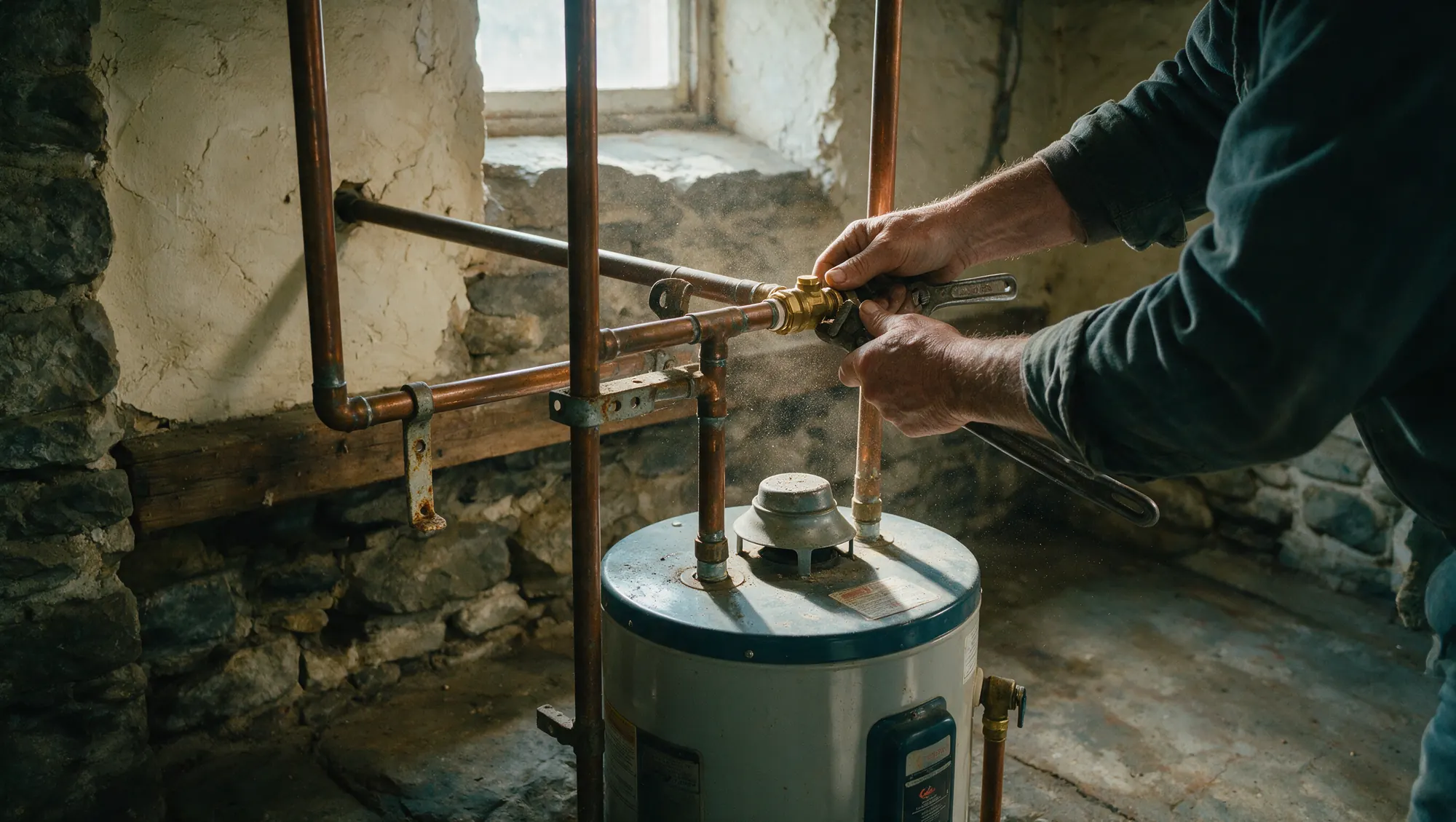
You’re in the right place if
- A water bill that has crept up
- A stain on a ceiling or wall
- Green crust on a copper pipe
- Rusty water first thing in the morning
- The well pump cycles when nothing is running
- The sound of water with everything off
The leak you can see is not the expensive one. A trap dripping into a cabinet makes a mess and gets your attention within a day. The one that matters is behind plaster, under a floor, or in the crawl space you haven’t been into since you bought the house.
We find leaks, fix them, and give you a straight answer about whether the pipe around the leak has a future. Sometimes that’s a coupling and an hour. Sometimes it’s a conversation about repiping part of the house. We’ll tell you which before anyone opens a wall.
What we handle
Pinholes in copper. Failed solder joints. Galvanized steel that has finally rusted through at a thread. Stains on a ceiling that keep growing, a musty corner nobody can explain, a water bill that has crept up two quarters running, a well pump that cycles at two in the morning with nothing on. We trace the water back to where it started, which is rarely where it shows.
When the honest answer is that the pipe is done, we replace it — a branch, a loop, or the whole system where that is genuinely the right call. If a pipe has already split in a freeze, that’s the same work in a different season; see frozen and burst pipes.
What we see in Upper Dauphin houses
Most older houses here are not one plumbing system. They’re three that met by accident: galvanized steel from when the house was built, copper from a partial redo in the seventies or eighties, and PEX or CPVC wherever somebody has fixed something since. The pattern we see over and over is copper to the basement ceiling and the last stretch of original steel still feeding the upstairs bathroom. That twenty feet is where the pressure goes and where the next leak comes from.
Copper has its own story. A lot of the groundwater in this part of Pennsylvania is soft and a little acidic, and it eats copper from the inside. One pinhole is a repair. Three in eighteen months means the water needs looking at before anybody buys pipe — a water treatment question as much as a plumbing one.
How it goes when we come out
We find the leak first, opening the smallest hole that reaches the pipe rather than guessing from where the stain is. Water runs along a joist and shows up ten feet from the break; the stain marks where it stopped, not where it started.
Then you get the options with the reasoning. A single bad fitting on sound copper gets repaired and we leave. If the failures are all on one original steel branch, we’ll suggest replacing the branch and leaving the good pipe alone. A whole-house repipe is right for fewer houses than the internet suggests: galvanized throughout, polybutylene, pinholes turning up in unrelated parts of the system, or walls already open for a remodel. PEX or copper depends on your house and your water, not on a preference, and we install both.
Worth knowing
- The cost is almost never the pipe. It’s the drywall, insulation and flooring behind it that has to dry out, and mold doesn’t wait long. A slow leak you already know about is worth dealing with now.
- Most homeowner policies cover a sudden burst and exclude slow seepage over months. Read yours before you need it.
- If water is running right now, shut the main first — our guide to finding your main water shut-off shows where it is — then read what to do when a pipe bursts.
Our work
Pipe & Leak Repair we've done
Our own jobs, photographed as we left them.
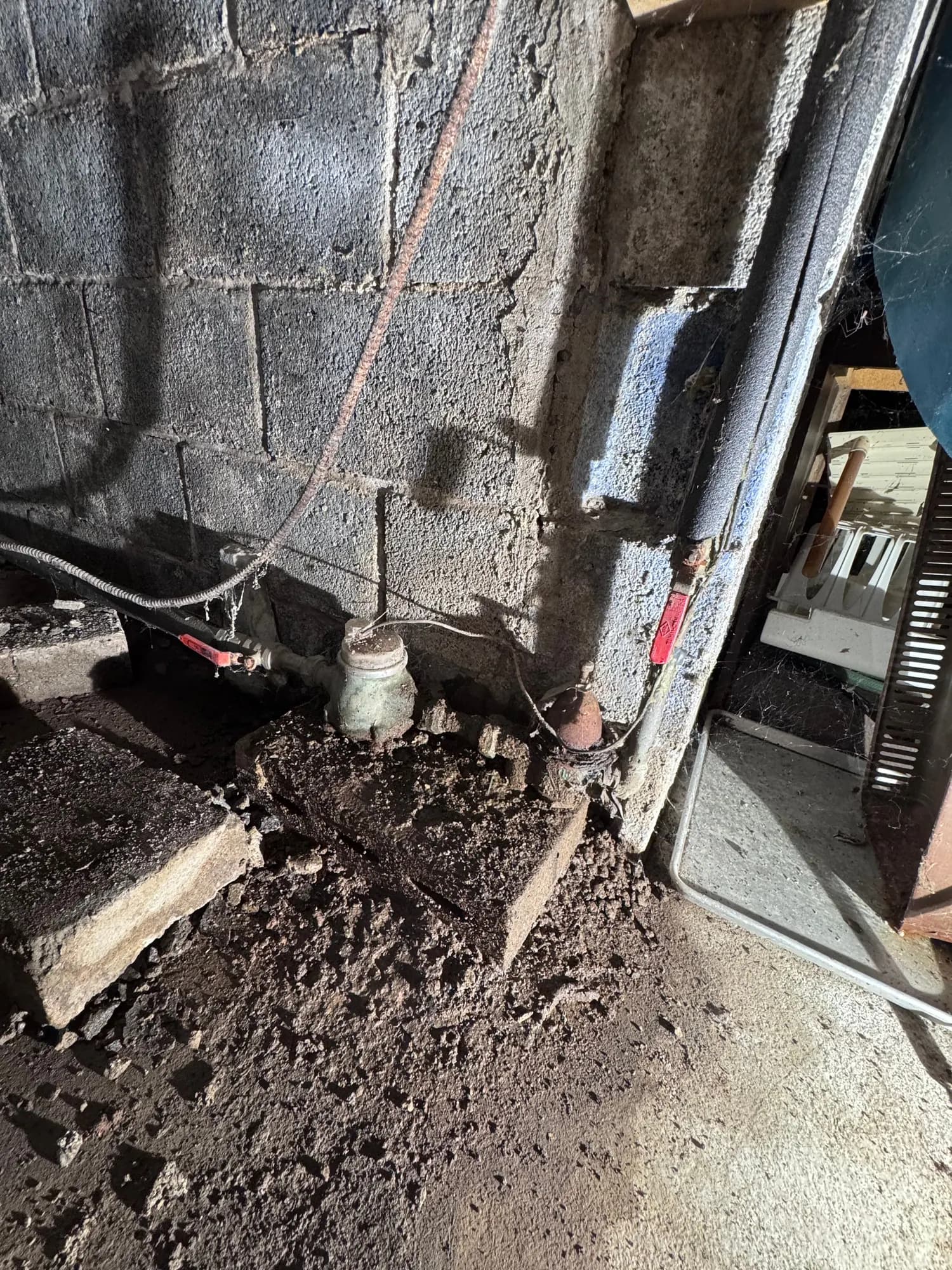 before
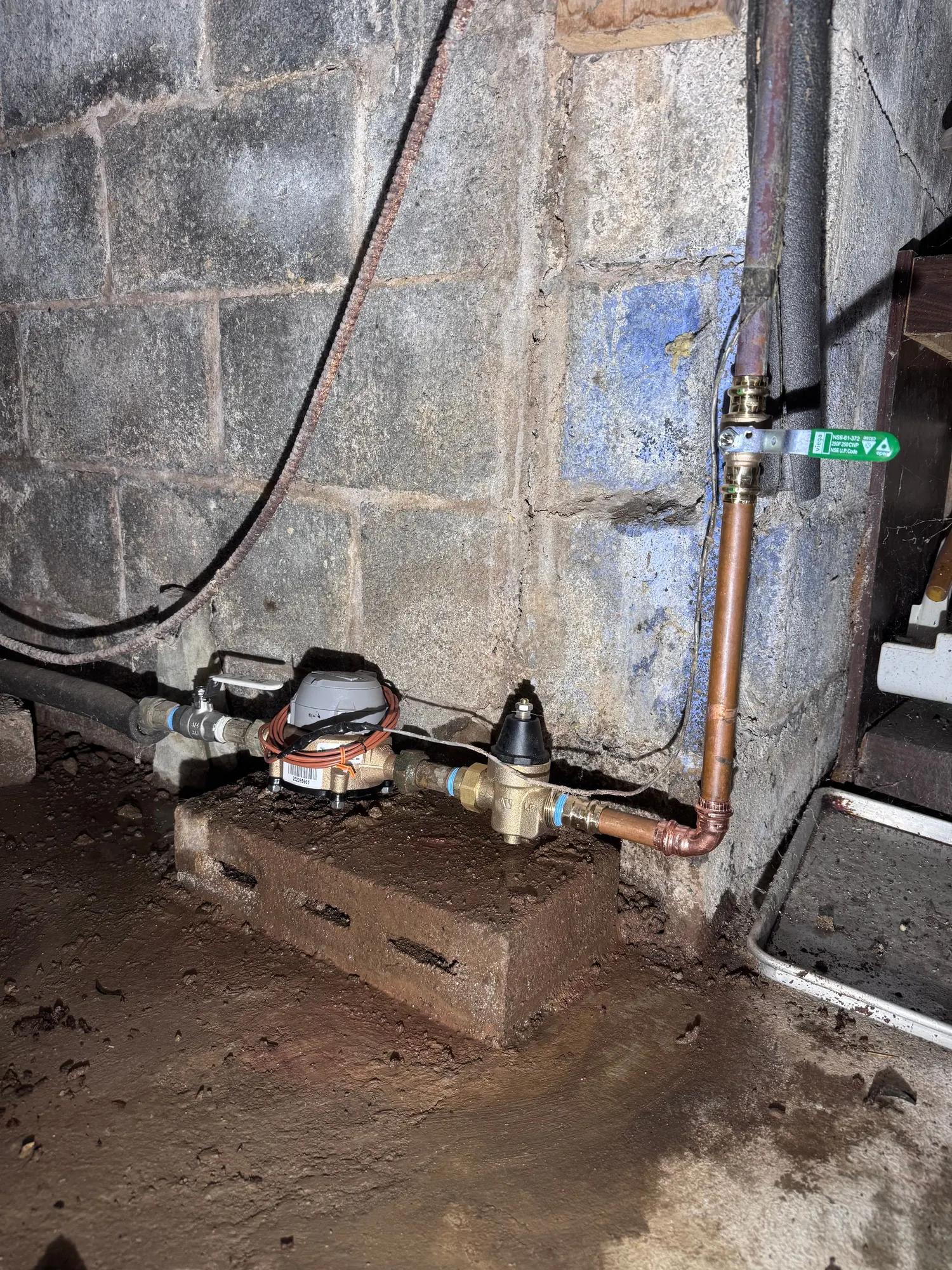 after
Before: the leaking main shut-off valveAfter: leak fixed — new main shut-off valve and pressure-reducing valve  before
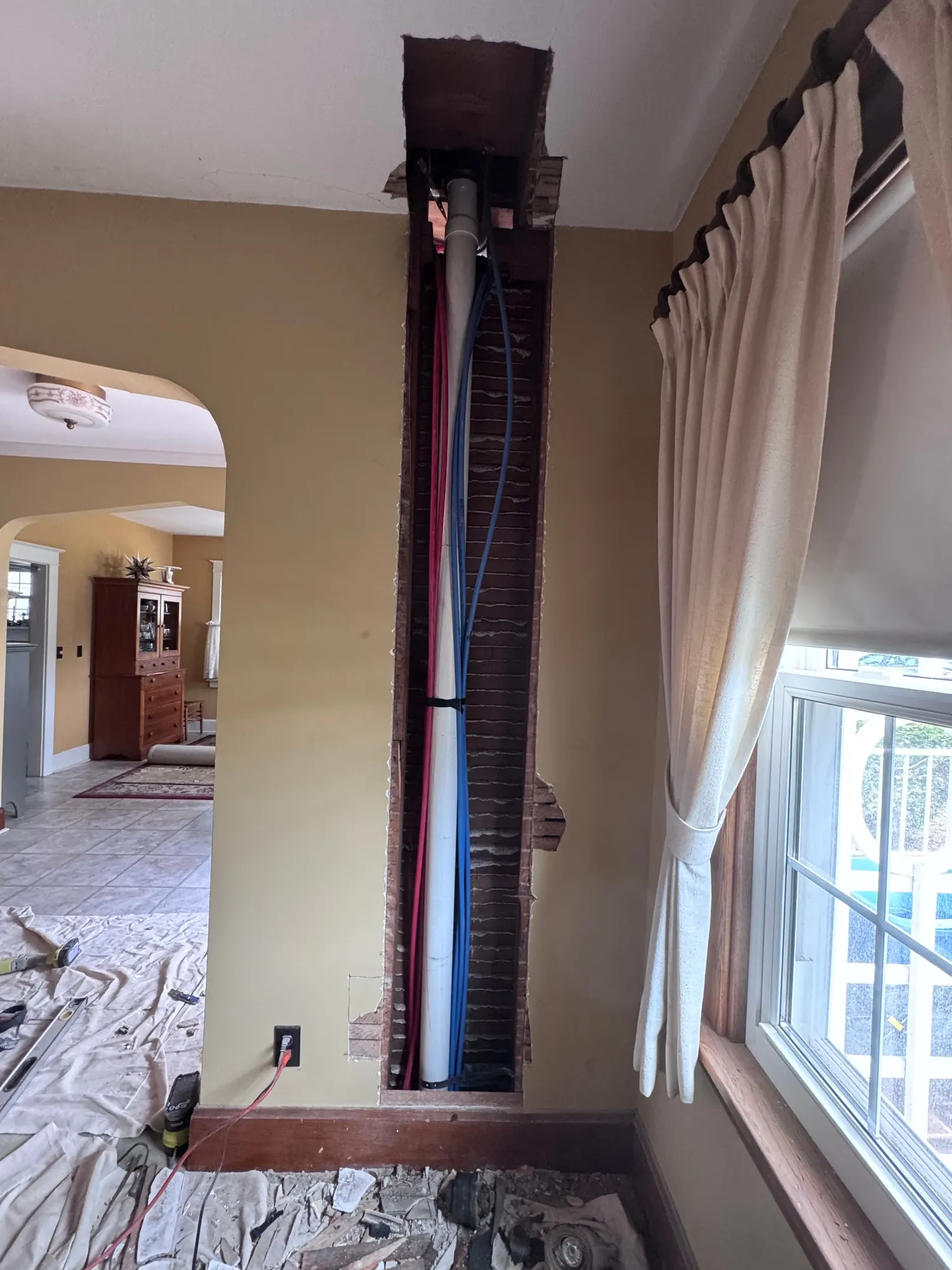 after
Before: a split cast iron stackAfter: the stack replaced with PVC