You’re in the right place if
- Water spraying or running inside the house
- No water at one fixture on a cold morning
- A tap that gives a trickle and then nothing
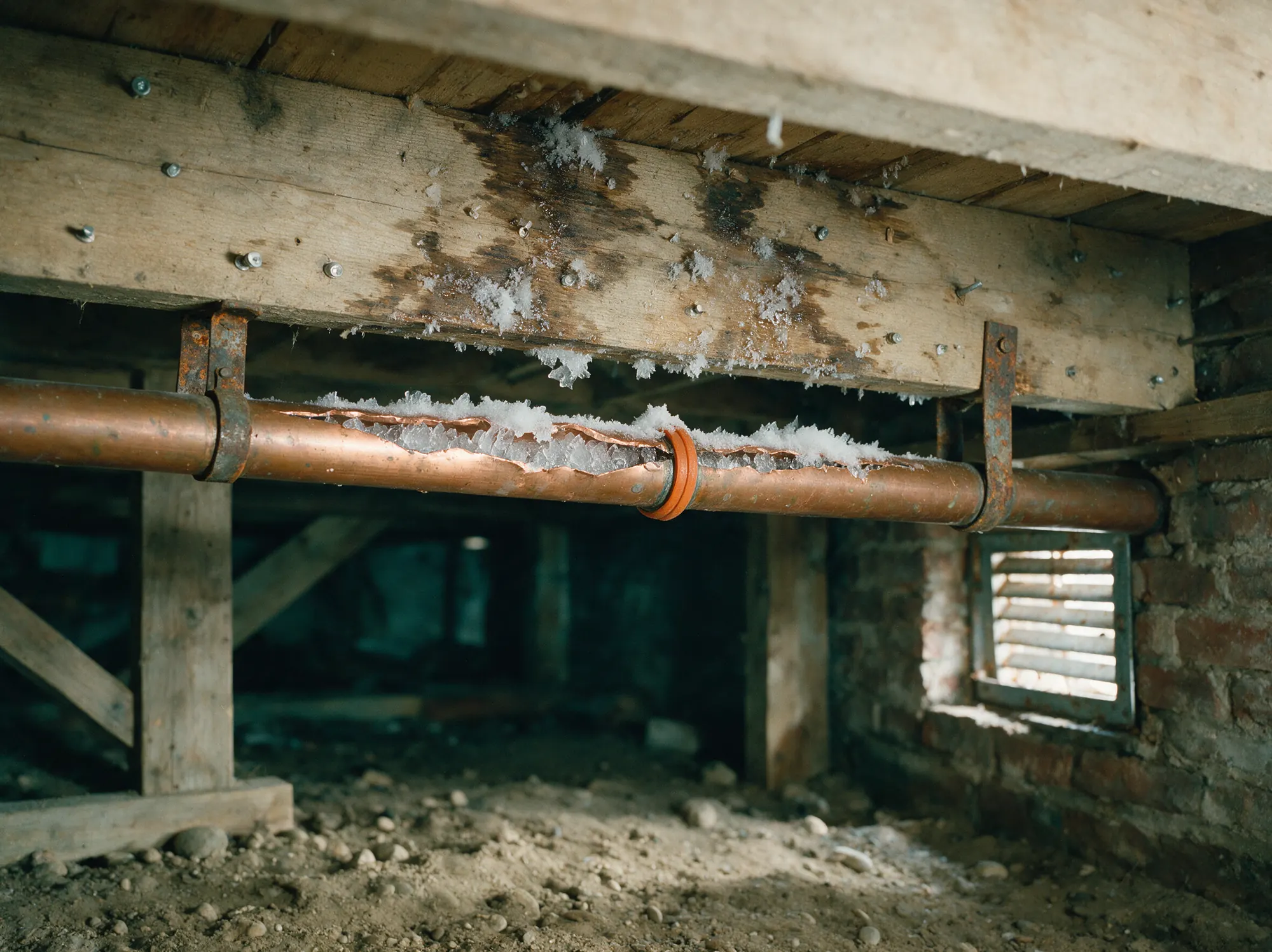
- Frost or bulging on a visible pipe
- Water stain spreading on a ceiling or wall
- Outside spigot that sprays inside the wall
- Pipes in a crawl space or unheated basement
A half-inch supply line under full house pressure will move several gallons a minute onto your floor. The difference between a wet corner and a ruined ceiling is usually how long it took somebody to find the shut-off valve.
So the first thing on this page is the valve. After that: what we do about a frozen line, what freezes first in the houses around here, and how to make next winter boring.
What we handle
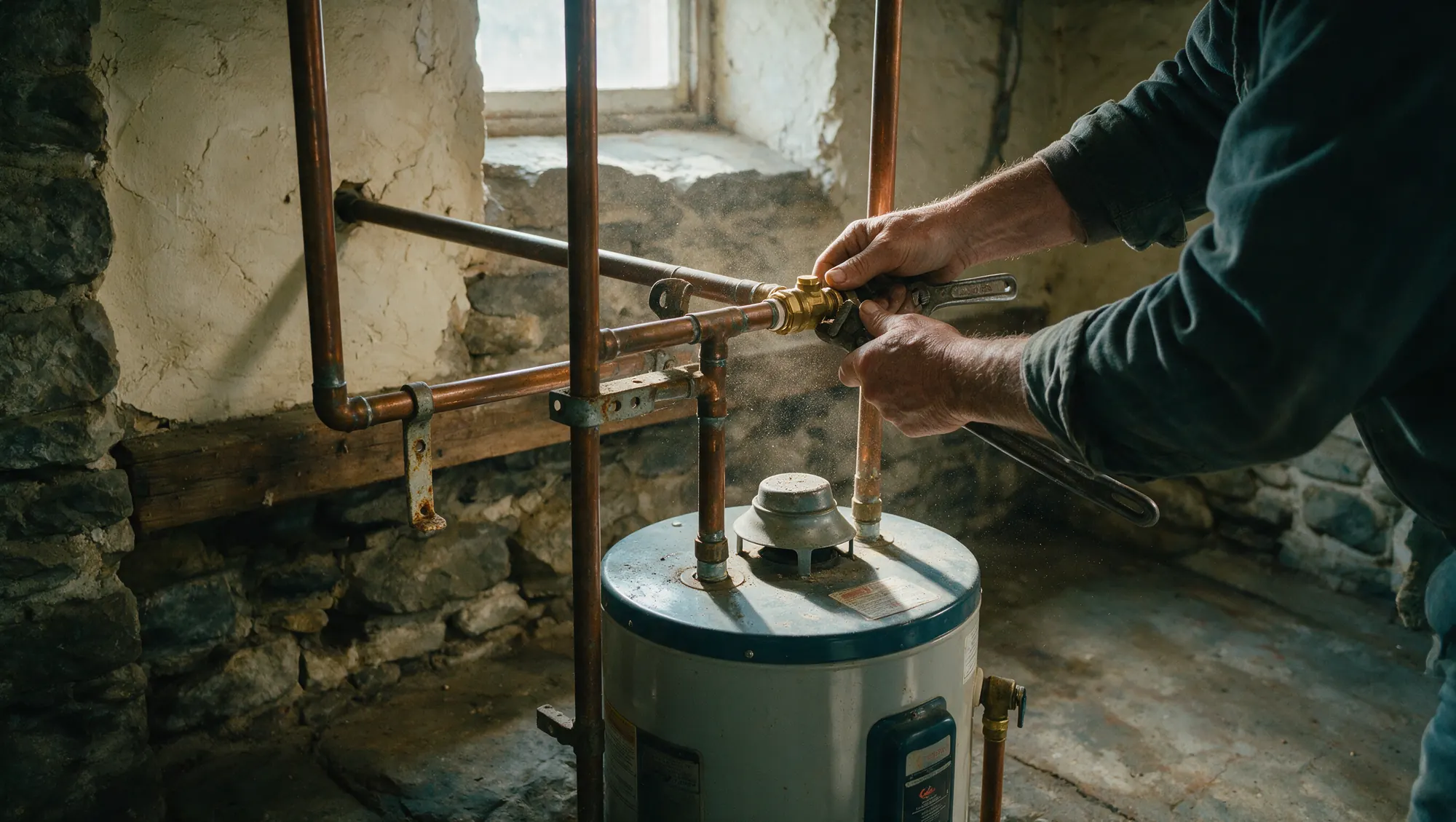
Frozen lines that haven’t let go yet, which is the good version of this problem. Pipes that have split and need cutting out and replacing. The follow-up work: the hose bib that burst inside the wall over winter and showed up in April, the crawl-space run that freezes every February, the well line in an unheated outbuilding. And the prevention side — rerouting a pipe out of an outside wall, insulating a rim joist, fitting a proper frost-free spigot.
If a split has already soaked a ceiling, the repair falls under pipe and leak repair: patch the run or replace it, and we’ll say which.
What we see in Upper Dauphin houses
Plenty of houses in this county were plumbed long before anybody thought about where a pipe should not go. The same spots freeze every year: the kitchen sink on an outside wall, the crawl space with the foundation vents left open, the stone-foundation cellar where cold works in through the sill, the laundry line that runs through a garage. Wind matters more than the thermometer. A north-facing sill with a finger-width gap will freeze a pipe on a night that leaves the south side untouched.
The most common burst in the region is the hose bib, and it’s the one people find in April rather than January. A frost-free spigot only drains if the hose comes off; leave one on through a winter and the trapped water splits the tube inside the wall. On a well, the thing to watch is the pressure tank and the line to it — if that side freezes, you lose the whole house, not one tap. See well pumps.
How it goes when we come out
A frozen pipe doesn’t leak while the ice is still plugging it. The flood starts when it thaws, often hours later and often when nobody’s home. So if a line is frozen, we find the section, warm it the right way from the tap end, and watch it as it comes back rather than leaving it to sort itself out. If the frozen run is inside a finished wall, opening drywall in the right place is a much smaller job than opening it in four wrong ones.
A split pipe gets cut out and replaced. Then we look at why it froze there, because the same run will do it again next year unless something changes. Sometimes the fix is a foot of insulation and a can of foam at the rim joist. Sometimes it’s moving the pipe. We’ll give you the options and the reasoning and let you decide.
Worth knowing
- Never put a torch or open flame on a frozen pipe. Houses burn every winter because someone put a flame in a joist bay full of century-old framing. A hair dryer and patience do the job.
- Take every hose off the outside spigots before the first hard freeze. Nothing on this list returns more for less effort.
- In a cold snap, let the tap at the end of the most exposed run drip. It works mostly because an open tap gives trapped water somewhere to go. Our guide to why pipes freeze in Pennsylvania has the rest of the prevention list, including what to do with a house that will sit empty.