You’re in the right place if
- Orange or brown staining in sinks and tubs
- Black specks or dark staining in the toilet
- Rotten-egg smell from the taps
- Soap will not lather and laundry feels stiff
- White scale on kettles, taps and shower doors
- Blue-green stains under a dripping tap
- Grit or cloudiness in the water
Groundwater in the Lykens Valley picks up whatever it moves through, and around here that mostly means hardness, iron, manganese and now and then sulfur. None of it is unusual. All of it shows up on your fixtures, in your laundry and inside your water heater long before anyone thinks to have the water tested.
The trouble is the symptoms overlap. Orange staining, a rotten-egg smell and stiff laundry can each come from two or three different causes, and the equipment that fixes one does nothing for another. That’s how people end up with a softener that didn’t solve the problem they bought it for. So we test first, and we decide after.
What we handle
Water softeners, iron and manganese filters, sulfur treatment, acid neutralizers, sediment filters and drinking-water filtration — sized to your water and your household, installed, and serviced when they need it. We also look after equipment we didn’t install, and sometimes the honest answer is that the unit you already have just needs setting up properly.
We don’t sell a system off a symptom. The test is the point of the visit.
What we see in Upper Dauphin houses
Out in the townships, hard water is the rule rather than the exception. It scales up water heaters, shortens their life, and leaves the white crust on kettles and shower doors that everyone here recognizes. Iron is next most common, and it’s the one that stains: orange in the tub, on the siding where the hose drips, in the white laundry. A black film inside the toilet tank is usually manganese riding along with it.
Inside Millersburg, Elizabethville and Halifax, on borough water, the list is shorter. The authority tests and treats the supply and publishes a report on it every year, so what’s left is usually hardness, taste or a chlorine smell. Sometimes the honest answer there is that you don’t need equipment at all. We’d rather say that than sell you a tank.
A lot of the softeners we get called to look at were sized by guesswork or set up once and never touched again. A properly set-up softener is quiet, uses less salt than people expect, and asks nothing of you beyond keeping the brine tank filled.
How it goes when we come out
We take a sample and look at what the water is already doing to the house — the tub, the heater, the inside of a toilet tank. Then we tell you what’s in the water, what it’s costing you, and what would fix it, starting with the smallest thing that would. If it’s a softener, we’ll say which kind and why. If it’s iron, we’ll explain why a softener alone isn’t going to hold it. If the numbers don’t justify equipment, we’ll say that too.
Nothing gets installed until you’ve seen the reasoning. If you want the detail behind it — what the numbers mean and which problem each piece of equipment actually solves — we’ve written it up in well water: iron, hardness and the sulfur smell so this page doesn’t have to.
Worth knowing
- A rotten-egg smell on the hot side only is usually the water heater’s anode rod, not the well. A different anode often fixes it. Worth ruling out before anyone sells you a sulfur system.
- If you’re putting a new water heater into a house on hard well water, a softener will do more for its life than anything else you can buy.
- Blue-green stains under a dripping tap point to acidic water eating the copper. That’s a pipe problem in the making, and a neutralizer is cheaper than a repipe.
Our work
Water Treatment we've done
Our own jobs, photographed as we left them.
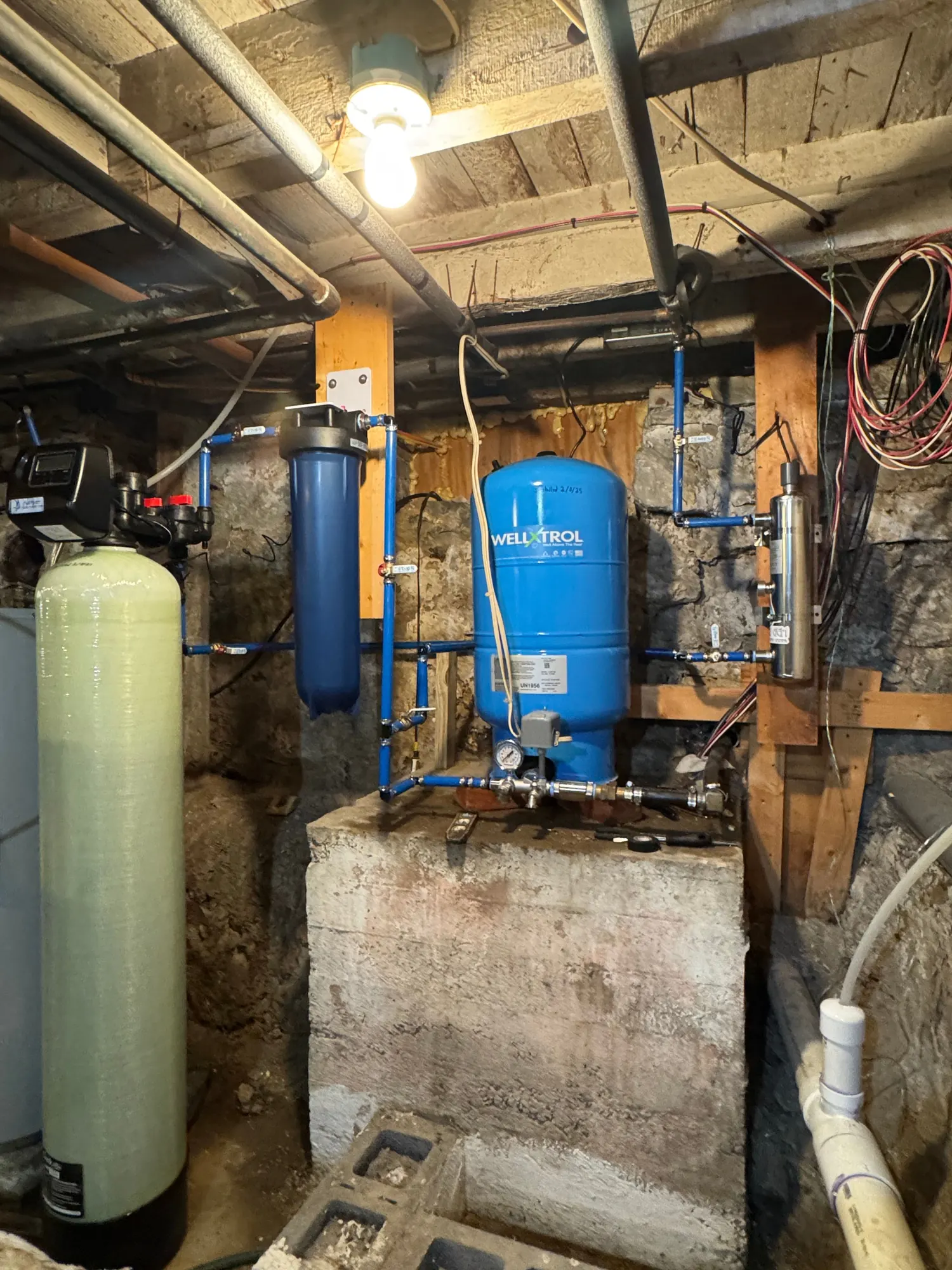
New well tank with sediment filter, softener and UV light  before
 after
Before: the old softener and tankAfter: new softener, filter and tank