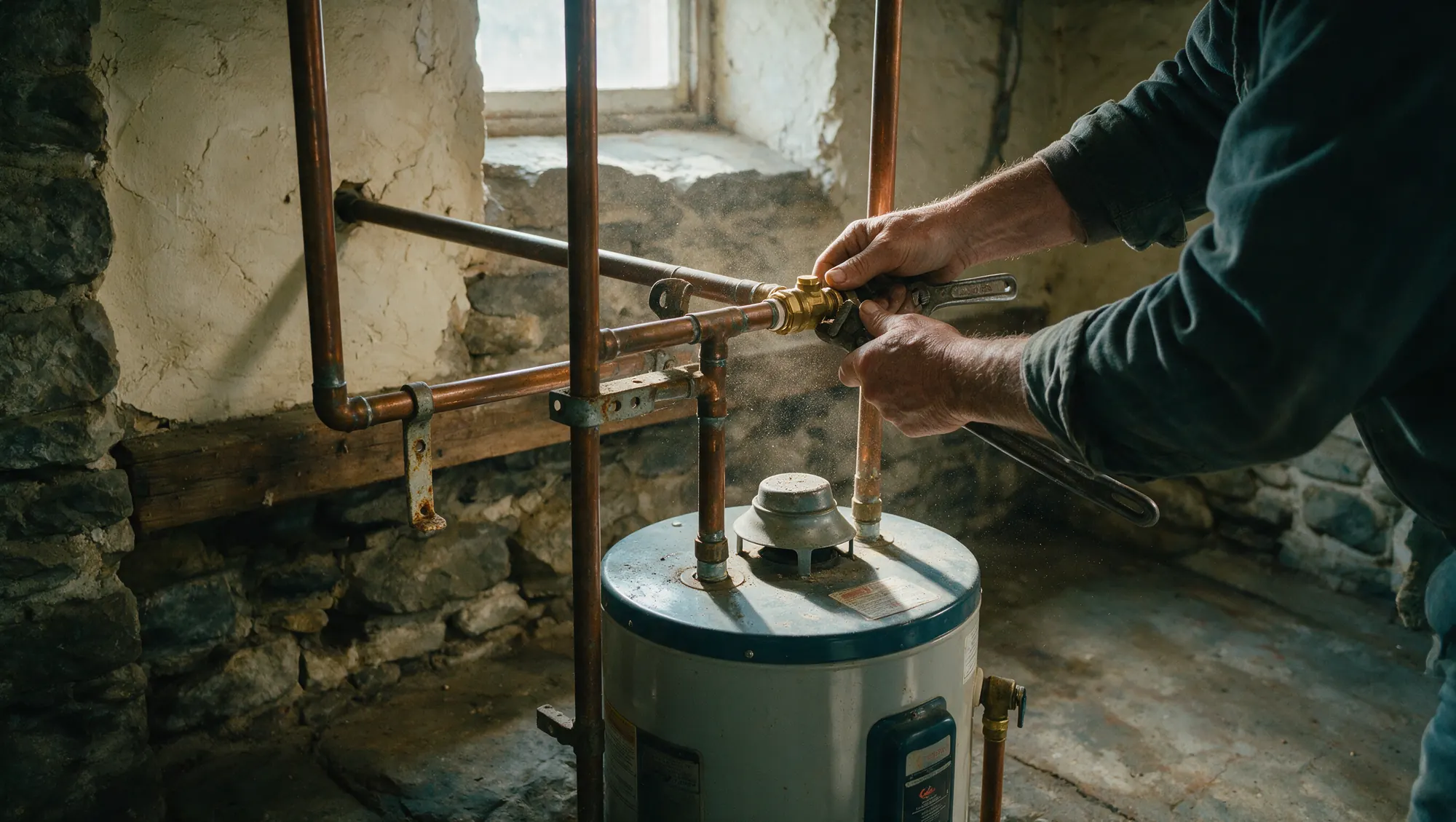
You’re in the right place if
- A shut-off valve that won't close
- Water under a sink or behind a toilet
- Banging or hammering pipes
- Low water pressure at one fixture
- An outside spigot leaking into the wall
- A dripping relief valve or a running meter
Most plumbing calls aren’t dramatic. A valve that won’t close. A supply line under the vanity weeping onto the cabinet floor. An outside spigot that pours water into the wall the first warm day of April, because a hose was left on it in November. Small failures. They stay small only if somebody catches them.
We do that kind of work all day, in houses across Millersburg, Elizabethville and Halifax. We’ll look, show you what we found, tell you what it takes to put right, and say plainly where the money isn’t worth spending.
What we handle
Shut-off valves that have seized or won’t close. Fixture stops under sinks and behind toilets. Braided supply lines, washing machine hoses, hose bibs and frost-free spigots. Banging pipes, pressure that’s too high or too low, a relief valve that drips, a main valve older than the person turning it. The small stuff, done properly.
Some of it crosses into other pages. A running toilet or a dripping faucet is a fixtures job. A pinhole in a copper line, or a stain that’s growing on a ceiling, is pipe and leak repair. Either way we’ll point you the right direction.
What we see in Upper Dauphin houses
Plenty of what we work on was built before the war, plumbed in galvanized steel, half redone in copper around 1975, patched in CPVC in the nineties and touched again by whoever the last owner happened to call. You open one wall and find three materials and four decades of decisions. So the first part of any repair is working out what you actually have.
The failures repeat. Fixture stops nobody has turned in fifteen years that weep the moment somebody tries. Frost-free hose bibs split inside the wall because a hose stayed on through the winter. Water hammer when the washer fills, loud because the pipe was never strapped properly. And a lot of poor pressure upstairs that turns out to be the last twenty feet of original steel pipe, not the water supply at all.
How it goes when we come out
We find the failed part and show it to you. Then you get the options with the reasoning: repair it, replace it, or leave it alone. A single bad fitting on sound copper is a repair. A fixture nobody makes parts for any more is a replacement. And a good toilet that runs doesn’t need replacing at all — that’s a flapper.
Nothing starts until you’ve said yes. While we’re under a sink for one thing we’ll usually mention if the stops there are seized, because changing them while we’re already there is quick, and it means the next repair doesn’t begin with shutting off the whole house. It’s a suggestion, not a condition.
Worth knowing
- Everyone in the house should be able to stop the water in under a minute. On borough water the main valve is usually beside the meter where the line comes in; on a well it’s on the outlet of the pressure tank. Our guide to finding your main water shut-off walks through it.
- Take the hose off the outside spigot every autumn. It’s the cheapest thing on this list and it prevents the most common spring leak we see.
- A photo of the failed part, or the valve you can’t turn, sent ahead of the visit lets us bring the right pieces the first time.
Our work
Plumbing Repair we've done
Our own jobs, photographed as we left them.
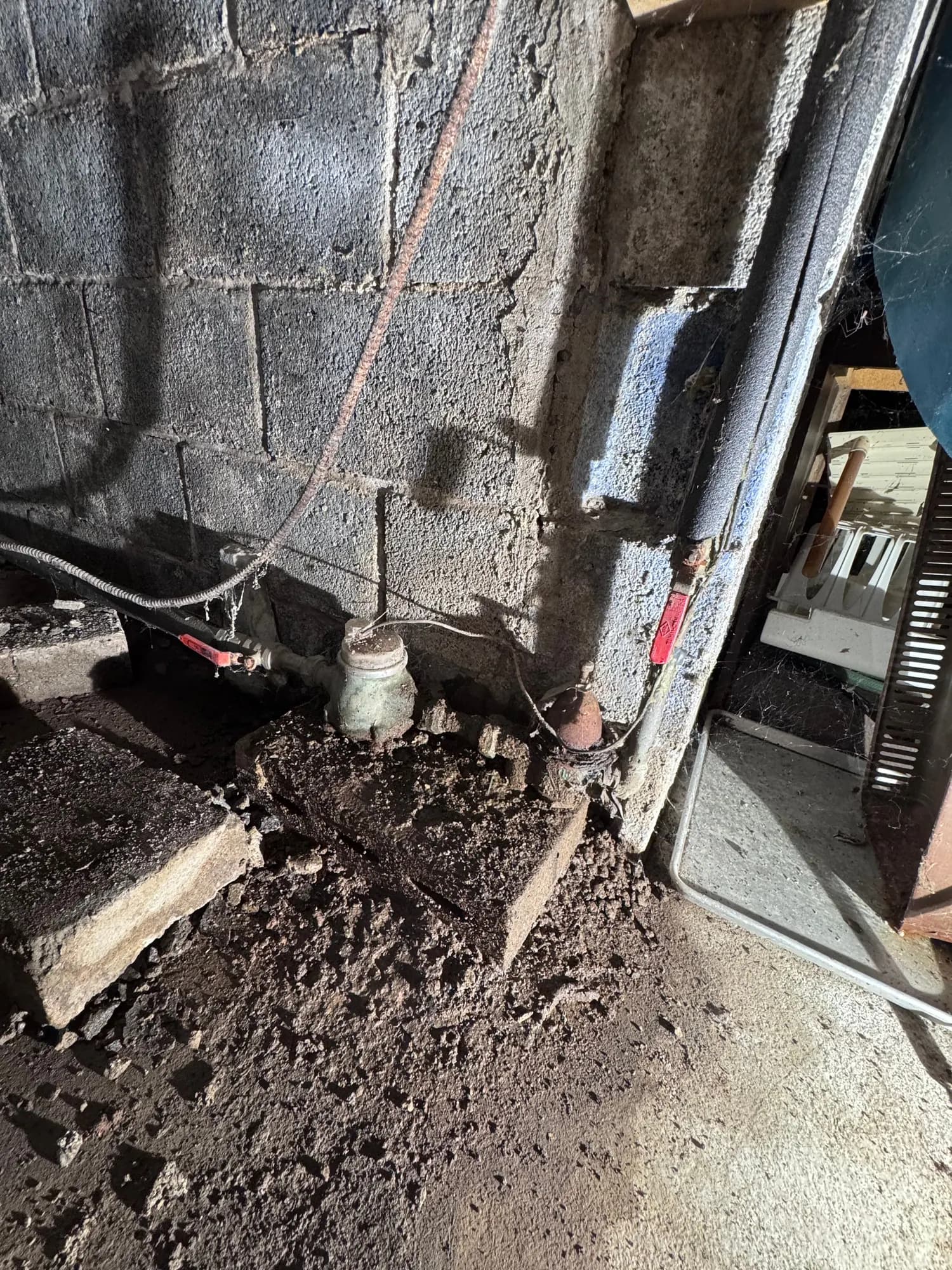 before
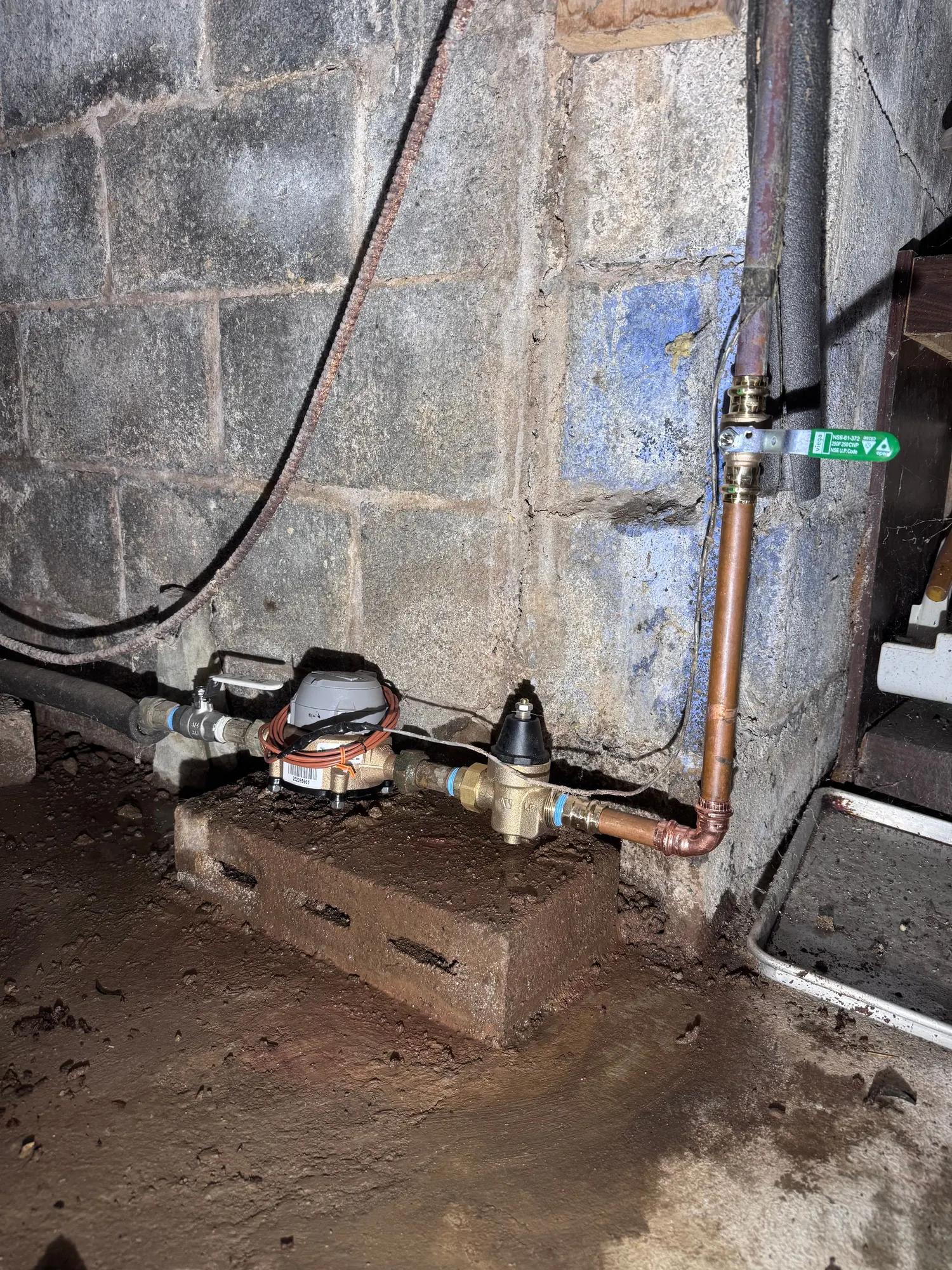 after
Before: the leaking main shut-off valveAfter: leak fixed — new main shut-off valve and pressure-reducing valve