The water in the borough comes out of five drilled wells, and the authority that owns them describes what it does to that water in a single sentence: “The treatment of the raw well water is simply chemical addition for pH adjustment, corrosion control and disinfection.” That is the most useful sentence anyone has written about plumbing in this town. A utility that doses specifically for corrosion control is telling you, plainly, what its raw groundwater wants to do to metal.
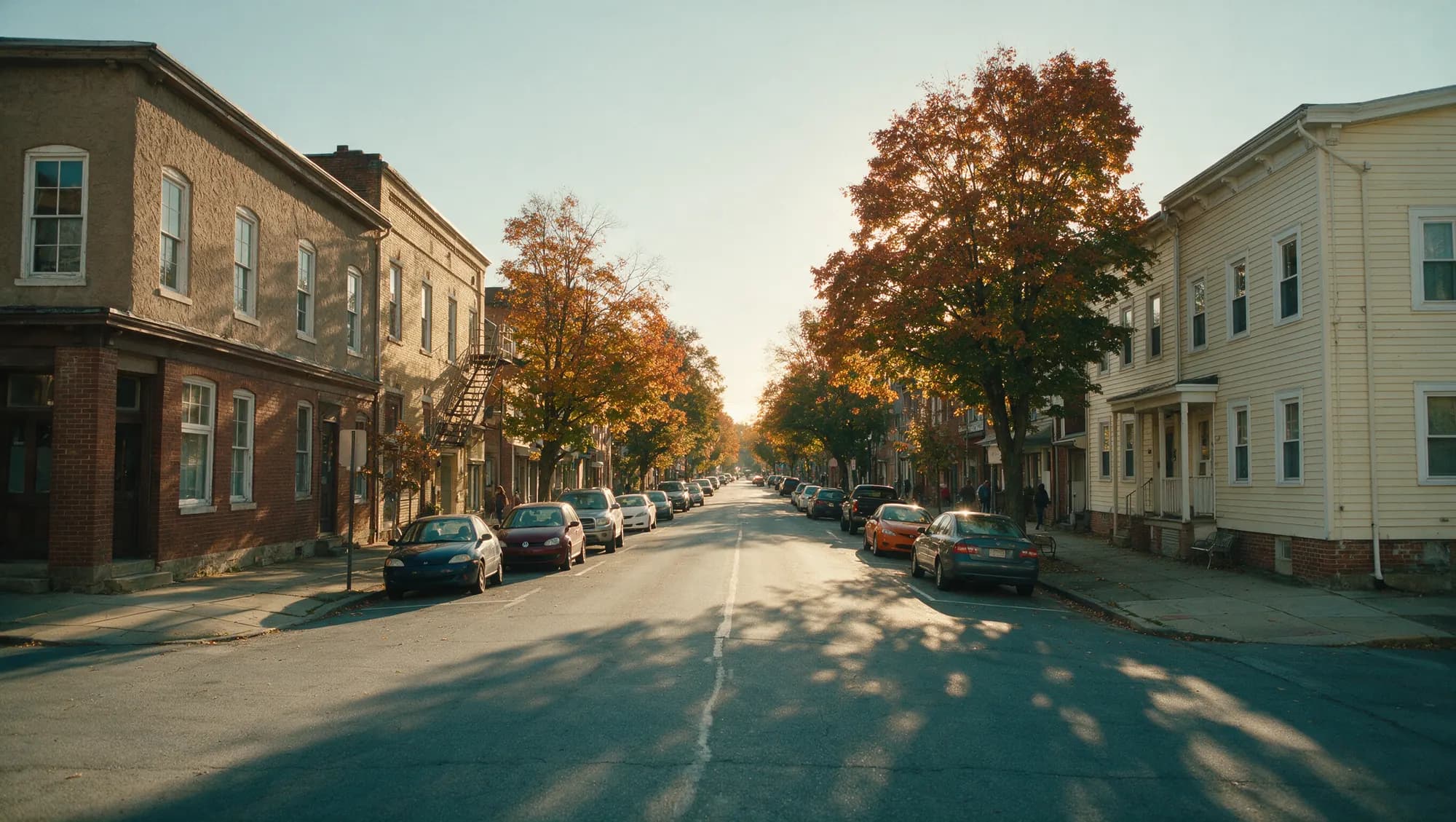
The other half of the picture is the housing. The Census Bureau’s 2020–2024 American Community Survey puts the median year built here at 1951, and for owner-occupied houses specifically at 1940. Better than nine houses in ten predate 1980. Set those two facts side by side and you have a place where mildly aggressive water has been sitting inside old metal pipe for a very long time.
Most of what we do in town follows from that. The rest follows from the ring of farms and township houses just outside it, which are on their own wells and their own septic systems, with nobody adjusting anything.
Five wells, and no filter plant
EPA lists the Elizabethville Area Authority, PWSID PA7220003, with a primary source code of GW — groundwater. The facility file names five drilled wells: Lentz, Loyalton, Well #3, Well #4 and Well #5. There is no surface intake on file and no filtration plant. The system serves roughly 2,700 people through 887 service connections.
That is worth setting against the neighbors, because the three towns we cover are genuinely different underneath. Millersburg runs a full filtration plant on surface water drawn from Wiconisco Creek. Halifax draws from mountain springs and wells inside Peters Mountain. Here it is drilled wells and chemical treatment. Three source types, three water chemistries, and three different sets of problems arriving at the fixture.
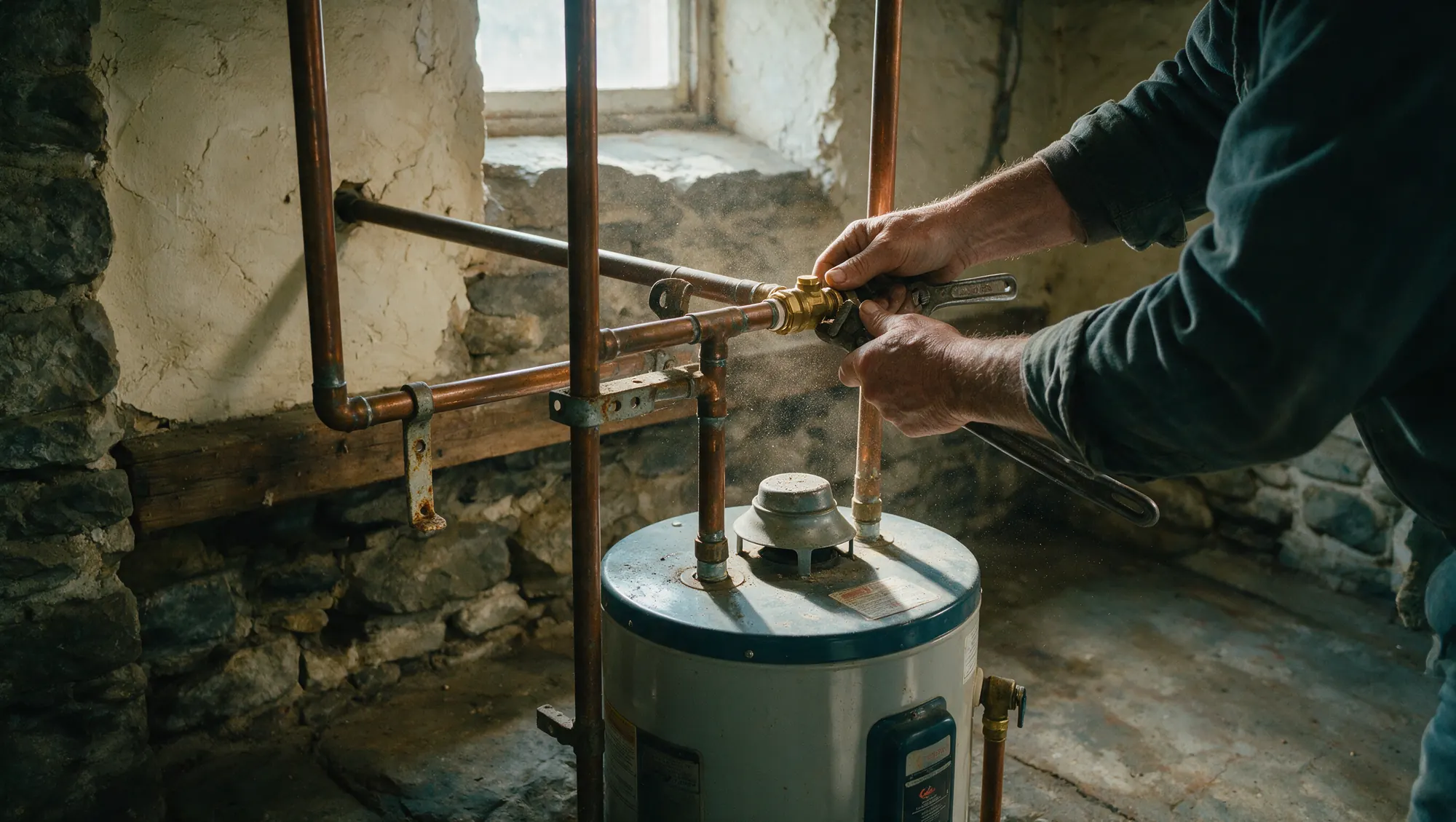
The treatment list is the tell. Filtration takes particles out. pH adjustment and corrosion control do something else entirely — they take water that is soft and slightly acidic and make it less inclined to dissolve the inside of your pipe. Corrosive water is the condition behind pinhole leaks in copper, blue-green staining in a white tub, and brass fittings that crumble when a wrench goes on them.
On the public side that is being handled, deliberately and by design. The point is not that the borough supply is a problem. The point is what the treatment recipe tells you about the groundwater this valley sits on — because outside the service area, on a private well, no one is dosing anything. Across wells sampled by USGS and state programs in Dauphin County, pH came in below 6.5, the corrosive range, in 28 of 127 wells. Roughly one in five.
What is actually in the walls
585 housing units, and the age profile is the sharpest of the three towns we work in. 43.8% were built in 1939 or earlier. 48.0% predate 1950. 93.8% predate 1980, the highest pre-1980 share of the three. Owner-occupancy runs 69.4% — also the highest — against a median home value of $174,300 and a vacancy rate of 9.4%.
Then there is the second peak. 134 units went up in the 1970s, which is 22.9% of every house in town. After that it essentially stops. Thirteen units in the whole of the 1980s. Fourteen in the 1990s. Nine since 2000, and the ACS estimate records none at all built in 2010 or later. Only seven houses in the borough are manufactured homes.
So the pipe you meet when a wall comes off runs to a short list. Galvanized steel supply in the pre-war houses, rusting closed from the inside out. Copper soldered before the 1986 federal ban on lead solder, which is most of the copper in town. And through that 1970s block, gray polybutylene — the flexible supply pipe made from roughly 1978 to 1995 whose plastic fittings, not the pipe itself, are the part that lets go. The general treatment of all three is on our pipe and leak repair page. What is different here is the density of it.
- Housing units
- 585
- Median year built
- 1951 — and 1940 for owner-occupied homes
- Built before 1980
- 93.8%, the highest of the three towns
- Built 2010 or later
- None in the ACS estimate
- Natural gas heat
- 7 households — 1.3%
- Reported wells
- 18 in the borough, 124 in Washington Township
Sewered in town, septic and wells outside it
Public sewer has run here since 1968, operated by the same authority that runs the water, and the collection system reaches into Washington Township on both the east and west sides of town. Step past those strips and you are on an on-lot system with a drainfield, and almost always your own well beside it.
The well counts make the division plain. The Pennsylvania Groundwater Information System, reproduced in Dauphin County’s 2025 hazard mitigation plan, records 18 reported domestic wells inside the borough and 124 in Washington Township. Jackson Township has 133, Wayne 88, Mifflin 51. One caveat travels with every one of those figures: PaGWIS is built from voluntary submissions by well drillers, so these are reported wells — a floor, not a census. The true counts are higher, and nobody knows by how much.
In practice that is two different service calls inside one zip code. In town, a pressure complaint is a house problem or a service line problem. A mile out it may be the well pump, the pressure tank or the switch, and a drain that backs up becomes a question about the septic system rather than about a borough main.
Winter, and the numbers the code actually uses
Dauphin County’s adopted design criteria — the sheet the third-party code officials work from — put the frost line at 40 inches and the winter design temperature at 0°F, with an air freezing index of 1000. Pennsylvania’s Residential Code, §P2603.5, requires a water service to be run not less than 6 inches below the frost line. The arithmetic is unforgiving: at least 46 inches, close to four feet, before a service line is deep enough to satisfy the code.
Frost depth is set by the local jurisdiction, so confirm the figure with the borough or township code official before anyone puts a machine in the ground. The second half of that code section needs no confirming, though, and it matters more for houses that already exist: where the winter design temperature is 32°F or lower, pipe is not to be run outside the building, in exterior walls, in attics or in crawl spaces without protection. At a design temperature of 0°F that covers every house in this valley — including the ones where a bathroom went onto an outside wall in 1972 and no one thought twice. That is the usual origin story for a frozen or burst pipe around here.
The same county design sheet lists radon potential as High. That is not a plumbing problem, but it touches one. An open sump pit is a direct path from the soil into the house, so when we set a sump pump in a basement in this county it gets a sealed, gasketed lid and a properly terminated discharge rather than a sheet of plywood.
Hot water in a town with no gas main
Seven households in the entire borough — 1.3% of occupied units — heat with utility natural gas. County-wide that figure is 38.3%. Fuel oil heats 47.7% of homes here, the highest share of the three towns we cover. Electricity accounts for 31.9%, propane 7.7%, and 3.8% are still burning anthracite in a valley that used to ship it.
So the hot water conversation looks nothing like the one in Harrisburg. A standalone water heater here is an electric tank in a cold basement or a propane unit fed from a yard tank — tank or tankless. A water heater call here starts with what is standing in the basement and what it burns, not with a brand name. Anyone selling you a gas water heater in this borough is selling to the wrong town.
How we work here
We look first, explain second, and quote third. If a repair is the sensible call we will say so. If the money is going into a unit with three years left in it, we will say that too, and you can decide with the same information we have.
- Say on the phone whether the house is on borough water or a private well. It changes the diagnosis before we leave the shop, and in this zip code it is genuinely a coin flip once you are past the edge of town.
- Find your main shut-off now, not during. On public water it is usually within a few feet of where the service enters the basement, often beside the meter. On a well it is the valve on the outlet side of the pressure tank.
- Photograph the rating plate on the water heater or the pressure tank. Half the diagnosis is in the model and the date, and it saves a trip.
- If you have gray plastic supply pipe, mention it. In a house from the 1970s block that detail changes what we bring and what we recommend.