The first question on a hot water call in this town is not a brand. It is what is standing in the basement, and whether it runs on electricity or propane.
Seven households in the whole borough — 1.3% of occupied units — heat with utility natural gas, against 38.3% across Dauphin County. Fuel oil accounts for 47.7%, the highest oil share of the three towns we cover; electricity 31.9%, propane 7.7%. That mix produces different equipment from what a Harrisburg plumber sees all day, and different failures.
Electric and propane
An electric tank is the simplest thing in the building and often the correct answer. Elements and thermostats are cheap and quick to change, which is why most no-hot-water calls on electric heaters end as repairs. The weakness is recovery: a 40-gallon electric in a house that gained a second bathroom is not broken, just too small for how the household now lives.
Heat pump water heaters deserve an honest answer. They pull heat out of the air in the room they occupy, cooling and dehumidifying it. In an unheated basement in this valley in January — the county winter design temperature is 0°F — there is little heat in that air to take, and the unit falls back on resistance elements exactly when demand is highest. Worth knowing before you buy, not a reason to rule one out.
Propane serves 41 households here. The vocabulary matches natural gas — burners, thermocouples, gas valves, venting — but orifices are sized differently, the tank belongs to you or your supplier, and combustion air and venting rules apply just as strictly in a tight basement.
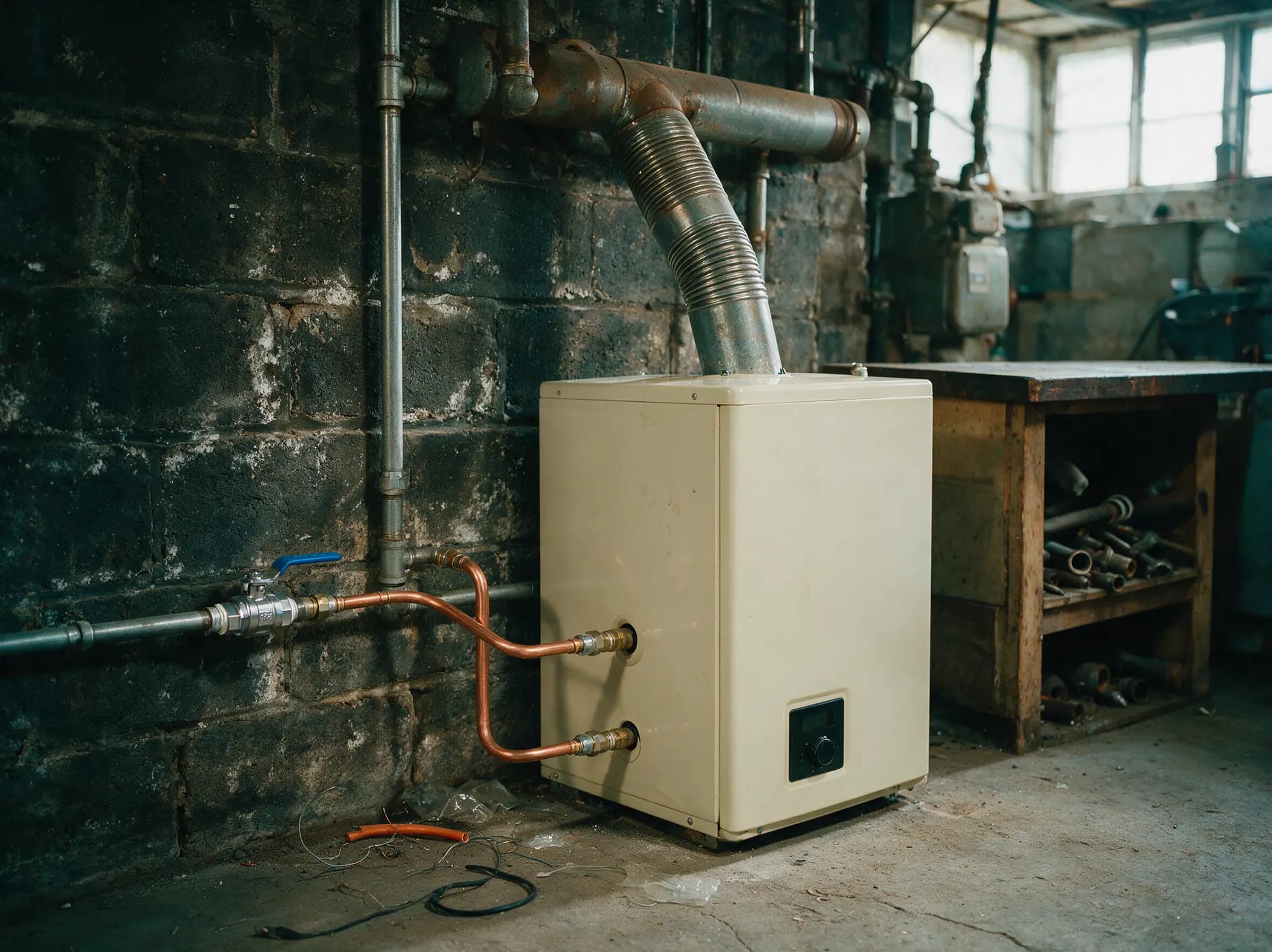
A propane tankless unit hangs on the wall and fires only when a tap opens, which frees floor space in a crowded basement and ends the back-to-back shower negotiation. What it asks of the house is a direct vent out through the wall, a supply line and regulator big enough for a burner that draws far more at full fire than a tank heater, and an annual descale on hard water.
Fitting new equipment into a house from 1951
The median house here was built in 1951, the median owner-occupied house in 1940. Almost every replacement is a retrofit into a space not designed for what is going into it, and the same obstacles turn up again and again:
- Getting it down there. Modern tanks are taller and wider than their equivalents from decades ago, thanks to thicker insulation. Bulkhead stairs and narrow cellar doors decide what fits before efficiency ratings enter the conversation.
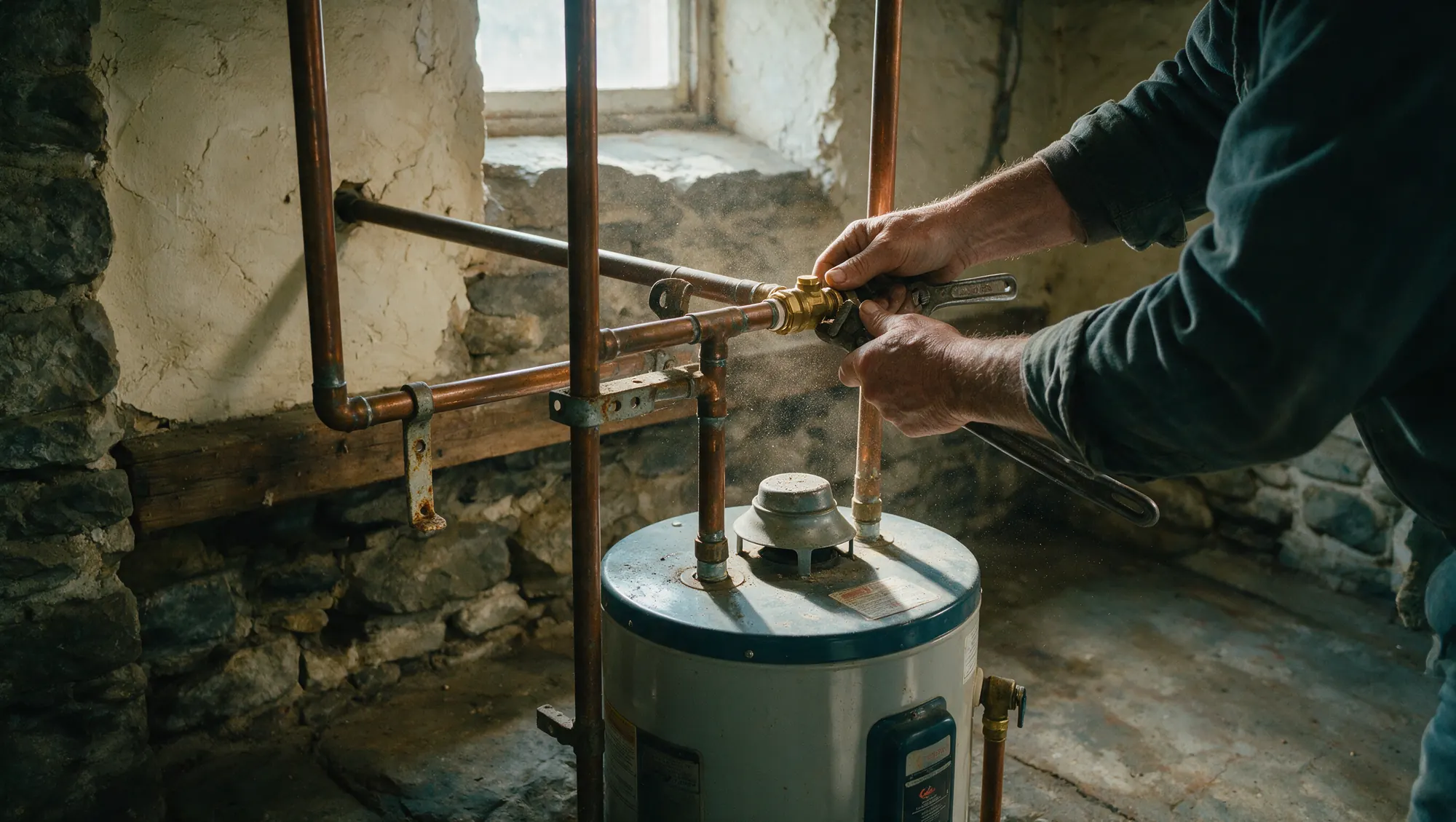
- Galvanized nipples at the connections. In older installs these are the most restricted six inches in the house. Replacing them while the heater is out is trivial, and it sometimes fixes a flow complaint the new heater would not have.
- No expansion tank. Add a check valve or pressure reducing valve and the system becomes closed, so heated water has nowhere to expand to. The spike shows up as a weeping relief valve that everyone blames on the new heater.
- No shut-off, no drain, no pan. Old installs often have no isolation valve on the cold inlet, a drain that will not reach a bucket, and a relief discharge terminated in a way that stopped being acceptable decades ago.
- The vent. A propane heater needs its own correct vent path. In a basement where the chimney is already serving the furnace or boiler, a direct-vent or power-vent unit out through the wall is often the cleaner answer.
The general run of repair-or-replace reasoning, tank sizing and life expectancy is on our water heaters page. If the hot water also smells of sulfur, read the anode section on our water treatment page first — a cheap fix that frequently gets mistaken for an expensive one.
The general version
This page covers what’s different about water heaters in Elizabethville. For how we approach the work generally — the diagnostics, the repair-or-replace reasoning, the parts — read the main page.
Water Heaters