You’re in the right place if
- More than one fixture backing up at once
- Basement floor drain floods when the washer runs
- Toilet gurgles when the tub drains
- The same clog keeps coming back
- Sewage smell in the basement
- All drains slow at once
- Soggy ground or green grass over the septic field
When every drain in the house backs up at once, the problem isn’t a drain. It’s the main line — the one pipe that carries everything from the house out to the street sewer or the septic tank. When it’s blocked, whatever goes down comes back up through the lowest opening it can find, which is usually a basement floor drain or a first-floor toilet.
We clear main lines, cut roots, descale old cast iron, and repair or replace the sewer line between the house and the tank or the street. We’ll tell you what we found and what it needs before any of it starts.
What we handle
Main line backups, and the clogs that keep coming back. Root cutting where trees have found the joints. Descaling cast iron that has narrowed with rust on the inside. Spot repairs where one section has broken or sagged, and full replacements when the line is past saving. We also put in cleanouts on houses that never had one, which makes every future problem on that line quicker and cheaper to deal with. If your house has to pump sewage up to the line instead of draining by gravity, that pump has its own page: sewage and septic pumps.
Where the scope stops matters, so here it is plainly: we handle the building sewer from the house up to the septic tank or the street connection. Pumping the tank, and anything to do with the drainfield or sand mound, is a septic contractor’s job. If that’s what you need we’ll say so and point you in the right direction rather than sell you the wrong service.
What we see around here
The older houses in Millersburg, Elizabethville and Halifax mostly went in with cast iron inside and clay tile outside, and each fails in its own way. Cast iron rusts from the inside, and the rough scale that builds up grabs everything that goes by until the pipe is a fraction of its size. Clay pipe comes in short sections, and the joints between them open up over the decades. Roots find those joints, because a sewer line is the wettest, warmest thing in the yard, and they grow in until the line is more root than pipe.
The good news is that both of those can be cleaned out before they cause a backup. A line that’s been descaled, or had the roots cut on a schedule, can go on working for years. The bad news is that most people don’t find out which one they have until the basement is wet.
How it goes when we come out
We clear the line first, because that’s what’s urgent. Then we work out why it clogged, because a clog has a cause. Sometimes that means a camera inspection to see what’s actually down there; sometimes we already know from what came back on the cutter. If the line is cleanable, we’ll tell you how often it’s likely to need it. If a section is broken or sagged, we’ll show you where and give you the repair option and the replacement option with the reasoning behind each.
We don’t push replacement. A line with one bad joint gets one bad joint fixed. A line that’s collapsing in three places is a different conversation, and we’ll have it honestly.
Worth knowing
- A toilet that gurgles when the tub drains, or a floor drain that comes up when the washer runs, is the main line talking. It’s worth a call before it’s a backup.
- If you’re on septic and the line to the tank is clear but drains are still slow, the tank may be full or the field may be struggling. That’s a septic contractor, and we’ll tell you if that’s where we’ve landed.
- A slow drain at one fixture is a drain cleaning job, not a main line job. If you’d like help telling the two apart, read why your drains keep clogging.
Our work
Sewer & Septic Lines we've done
Our own jobs, photographed as we left them.
 before
 after
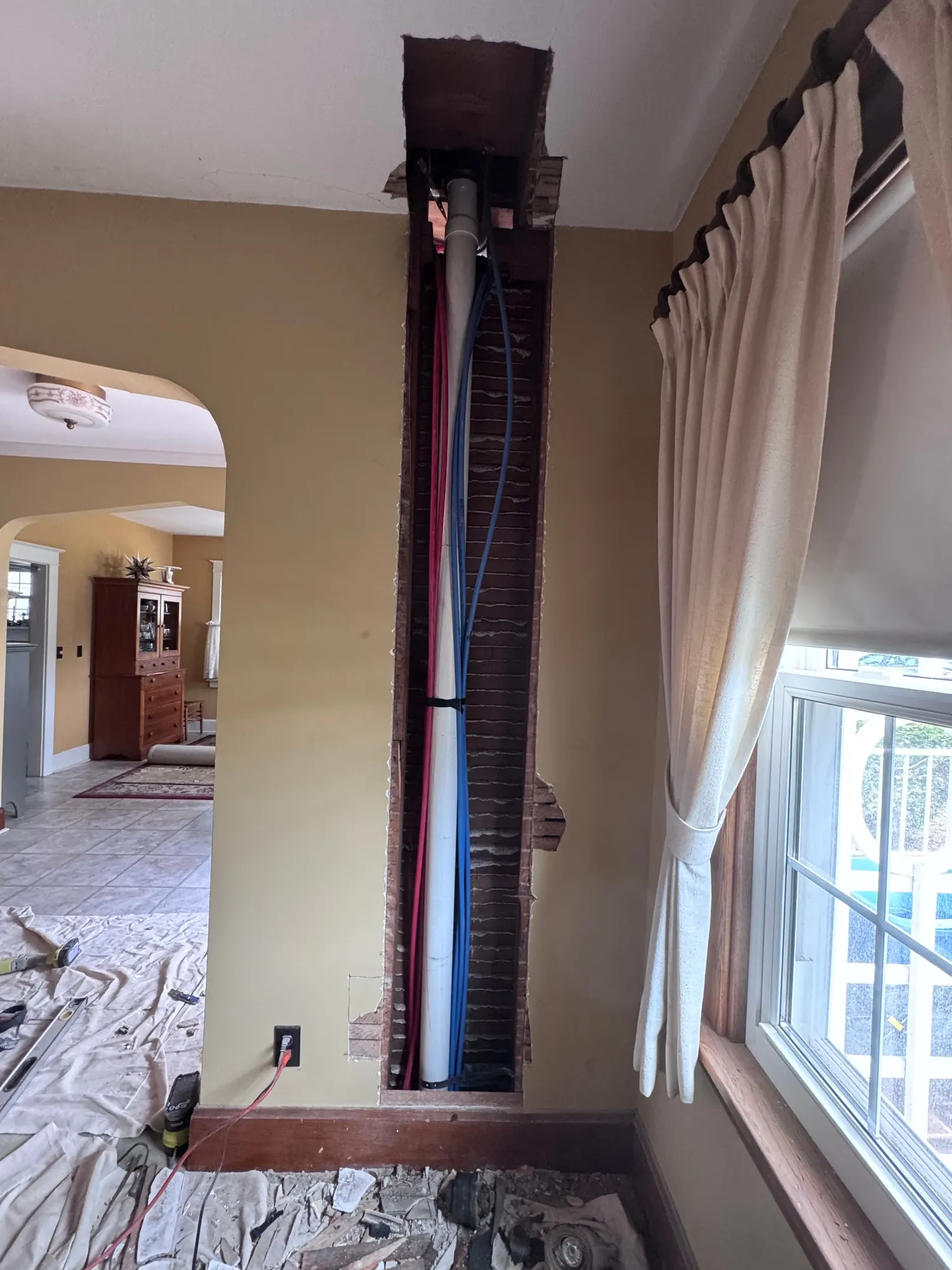
Before: a split cast iron stackAfter: the stack replaced with PVC  before
 after
Before: old cast iron drain lineAfter: cast iron replaced