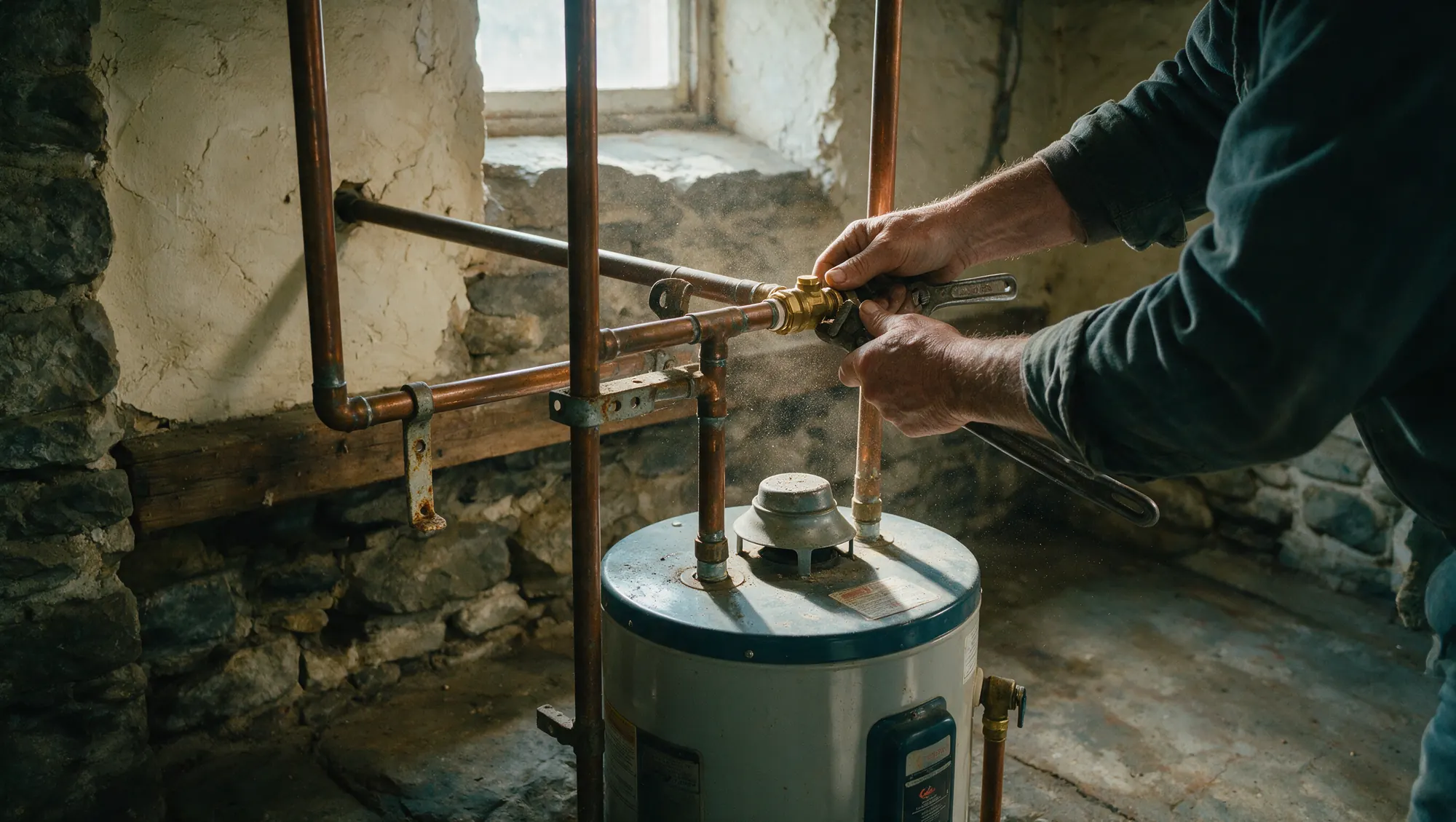
You’re in the right place if
- No hot water at all
- Hot water runs out too fast
- Water around the base of the tank
- Rusty or discolored hot water
- Rumbling or popping from the tank
- Heater is past ten years old
A water heater usually gives a little warning before it quits — the hot water doesn’t last like it used to, the tank starts making noise, there’s a tinge of rust in the first draw of the morning. Then one day there’s water on the basement floor and it becomes an emergency that could have been a scheduled Tuesday.
We repair water heaters when a repair makes sense and replace them when it doesn’t, and we’ll tell you plainly which one you’re looking at before any work starts.
What we handle
Standard tank water heaters, electric and propane, and propane tankless units — repair, replacement and new installations. We take the old unit away, and we leave the space cleaner than we found it.
If the tank itself is leaking, that’s a replacement; there’s no safe repair for a corroded pressure vessel. Most everything else — a failed element or thermostat, a bad relief valve, a worn-out anode, a control that’s stopped responding — is a repair, and usually a quick one.
What we see in Upper Dauphin houses
There’s almost no natural gas in Millersburg, Elizabethville or Halifax. Hot water here mostly comes from electric tanks or from propane — and each one fails differently and gets fitted differently. A lot of what we do is putting a modern heater into a basement that was laid out in the 1950s, where the old one has been in a corner nobody has looked at in fifteen years.
The other thing we see constantly is hard well water. It shortens the life of any tank and scales up a tankless heat exchanger fast. If you’re on a well, that shapes what we’ll recommend — and sometimes the honest answer is that a softener will do more for the next heater than anything else.
How it goes when we come out
We look at the heater, tell you what we found, and give you the repair option and the replacement option with the reasoning for each. If yours is eleven years old and needs an expensive part, we’ll say that spending the money buys you an eleven-year-old heater with a new part — and let you decide. We’d rather tell you that than take the repair.
Tank or tankless is a real conversation, not a sales pitch. Tankless suits some households and some houses; in plenty of older homes around here the venting and fuel supply it needs are most of the cost. We install both and we don’t have a favorite.
Worth knowing
- A photo of the rating plate on the side of the tank tells us the age and the model before we arrive, so we can bring the right parts.
- A rotten-egg smell on the hot side only is usually the heater, not the well — a different anode rod often fixes it. Worth checking before anyone sells you a water treatment system.
- Flushing sediment once a year adds real life to a tank on well water. If you’d like the full rundown, read how long a water heater lasts.
Our work
Water Heaters we've done
Our own jobs, photographed as we left them.
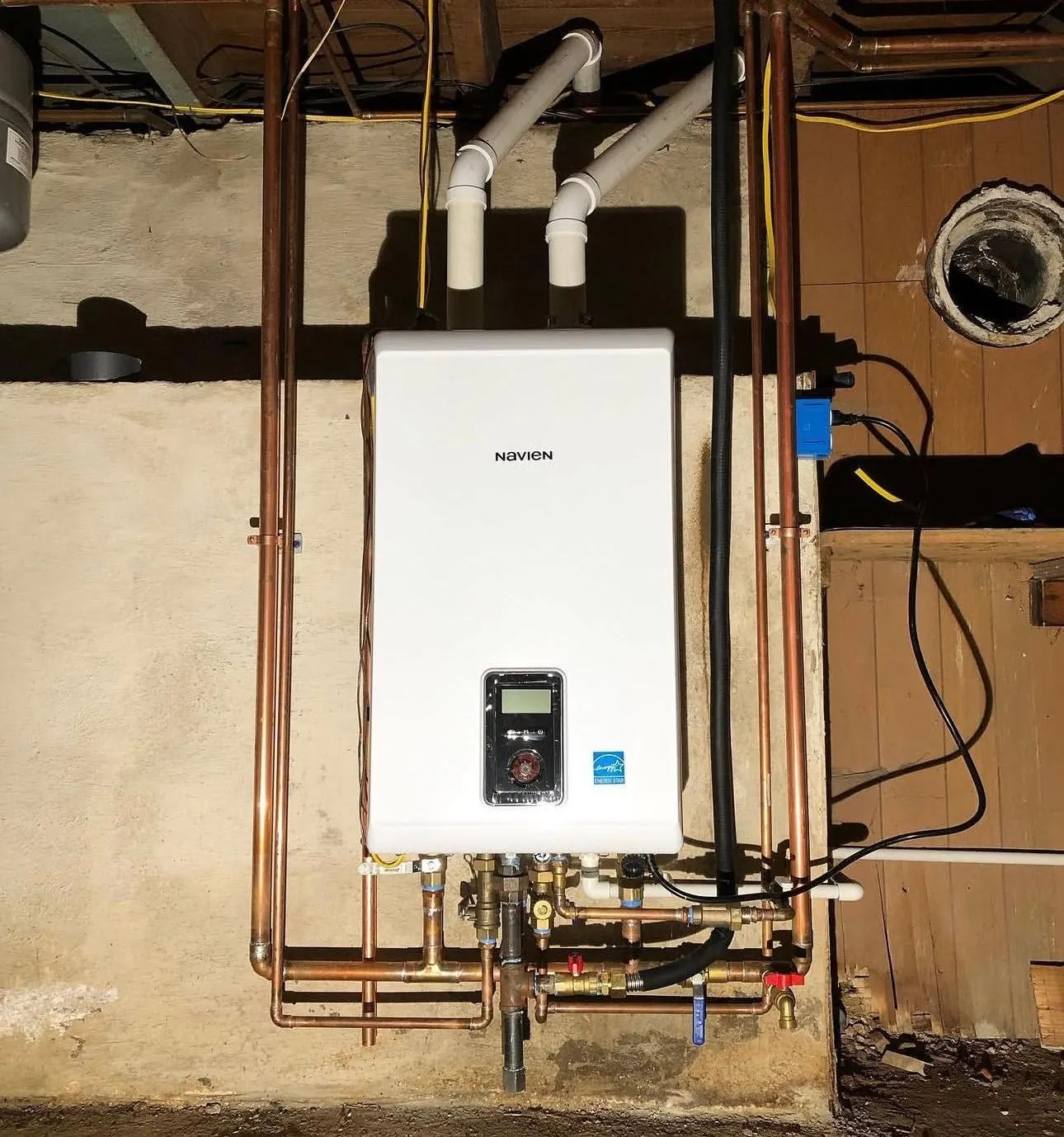
Propane tankless water heater install