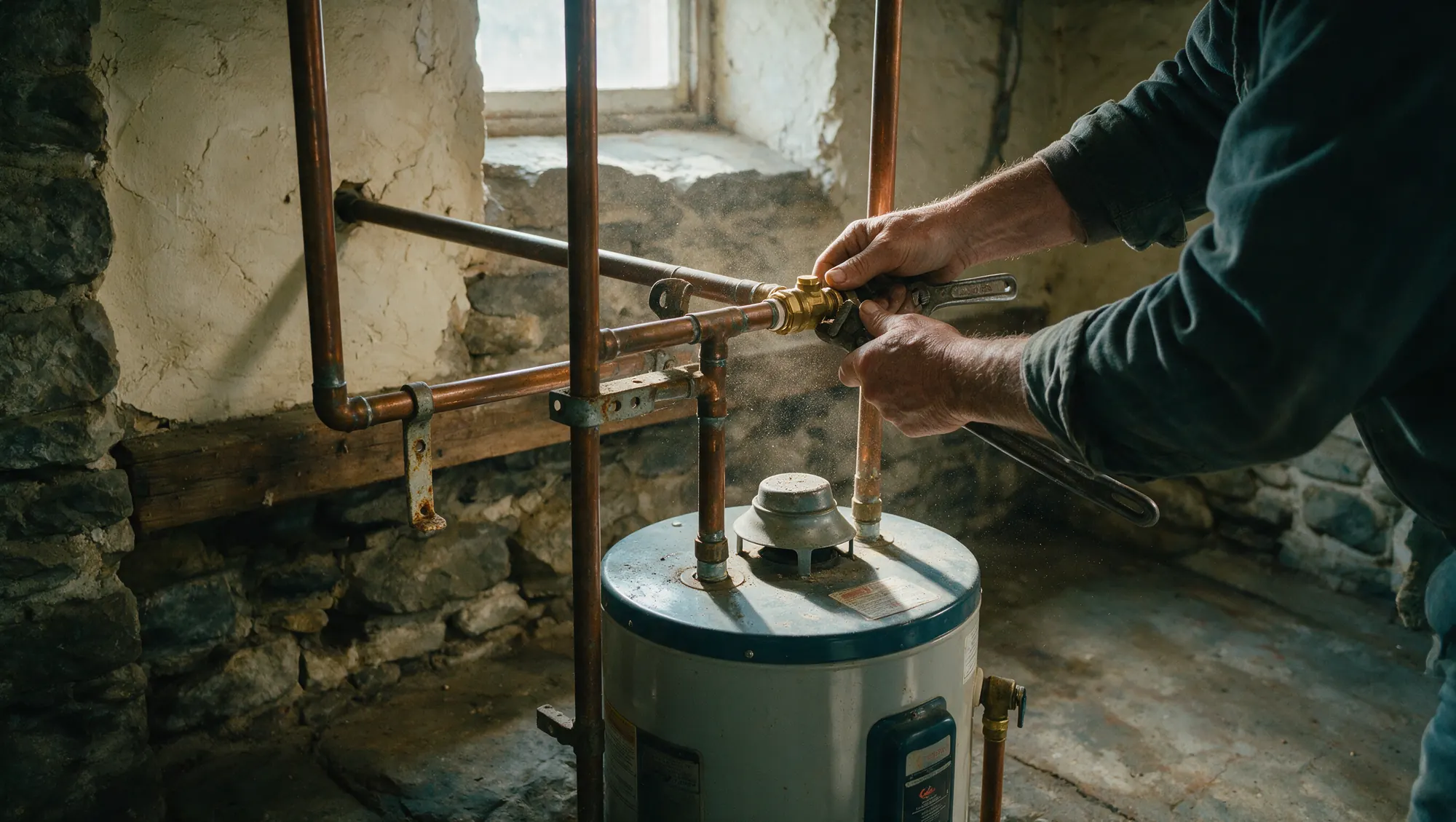
You’re in the right place if
- Alarm light or buzzer on the pump panel
- Sewage backing up in a basement bathroom
- Pump runs constantly or not at all
- Gurgling from the lowest fixtures
- Sand mound pump not dosing
- Sewage smell near the basin lid
- Want a sink or toilet in a basement below the sewer line
There are three pumps in Upper Dauphin County that nobody thinks about until the alarm goes off: the grinder pump in the yard on a low-pressure sewer, the ejector pump in a basin under the basement floor, and the dosing pump on a sand mound septic system. Each one moves sewage uphill, each one has a float and an alarm, and each one picks its moment.
We repair and replace all three. When the panel is buzzing at nine at night, we’ll tell you whether it’s the pump, the float, the check valve or the control — and a good share of the time it isn’t the pump.
What we handle
Grinder pumps, including the basin-and-panel systems that went in across Halifax Township when the low-pressure sewer extension connected roughly 143 homes to the HAWASA system. Sewage ejector and solids-handling pumps in basements that sit below the street sewer, where a bathroom or laundry can’t drain by gravity. Sand mound and effluent dosing pumps on septic systems, which lift water from the tank up to the mound. Pumps, floats, check valves, alarm panels and the piping in and out of the basin.
What we don’t do matters just as much. We don’t pump out septic tanks, and we don’t work on drainfields or the mound itself. That’s a septic contractor’s job, and if that’s what you need we’ll say so rather than take a call we shouldn’t. The pump, its controls and the plumbing to it are ours.
And the small ones: basement utility pumps. If you want a laundry sink, a toilet or a whole bathroom in a basement that sits below the sewer line, the drain has to be pumped up to it. We install and service the compact sink and toilet pumps that make that work — Saniflo-style macerating units and utility-sink drain pumps — and we’ve done a fair few of them lately. The photographs below are one of those jobs.
What we see in Upper Dauphin houses
Sand mounds are everywhere in the townships because the soils here so often won’t take a conventional in-ground field. That means a lot of septic systems depend on a pump to work at all, and most owners have never seen it. It lives in a tank below ground, dosing a few times a day, and the first sign of trouble is an alarm or a wet patch at the mound.
In Halifax Township the grinder pump is newer and better understood, because the authority handed every connection a manual. Even so, the same things fill our calls: wipes and grease, which a grinder will manage for a while and then not; a float hung up on its own cord; a check valve letting everything run back into the basin so the pump starts every few minutes. And storms. A grinder has very little storage, so when the power goes out you’re a few flushes from the alarm.
Basement ejector pits are the quiet one. They sit under a sealed lid in older houses in Millersburg and Elizabethville where somebody added a downstairs bathroom decades ago, and they go years without a glance. A gurgle from the lowest fixture, or a smell near the lid, is usually the first anyone hears of it. If you’ve got water on the basement floor and aren’t sure what it is, wet basement: groundwater or plumbing? will help you tell before you call.
How it goes when we come out
We open the basin, check the power and the panel, lift the float and watch what the pump does. That usually tells us which of four things has gone wrong. A stuck float or a tired check valve is a small repair, and you keep your pump. A control failure is a panel job. If the pump itself has burned out or seized on something it couldn’t grind, we’ll give you the options and the reasoning — including whether to put a like-for-like pump back in or step up to one that will handle what your house actually sends it.
We leave the basin sealed, the panel reset and the area clean. And if what we find is a septic problem rather than a pump problem — a tank standing full because the field won’t take water — we’ll tell you that and point you to the right trade instead of selling you a pump that won’t fix it. Where the trouble might be in the line rather than the pump, a camera inspection usually settles it.
Worth knowing
- Only toilet paper goes down. “Flushable” wipes are the single most common thing we pull out of a grinder or ejector pump, and grease is second.
- When the alarm sounds, stop using water. There’s very little storage above the alarm float. Silence the buzzer, then call.
- If you have a generator, ask us about wiring the pump to it. On a grinder, a power outage is a sewage problem, not just an inconvenience.
- If it’s a sump pump moving groundwater rather than sewage, that’s a different page.
Our work
Sewage & Septic Pumps we've done
Our own jobs, photographed as we left them.
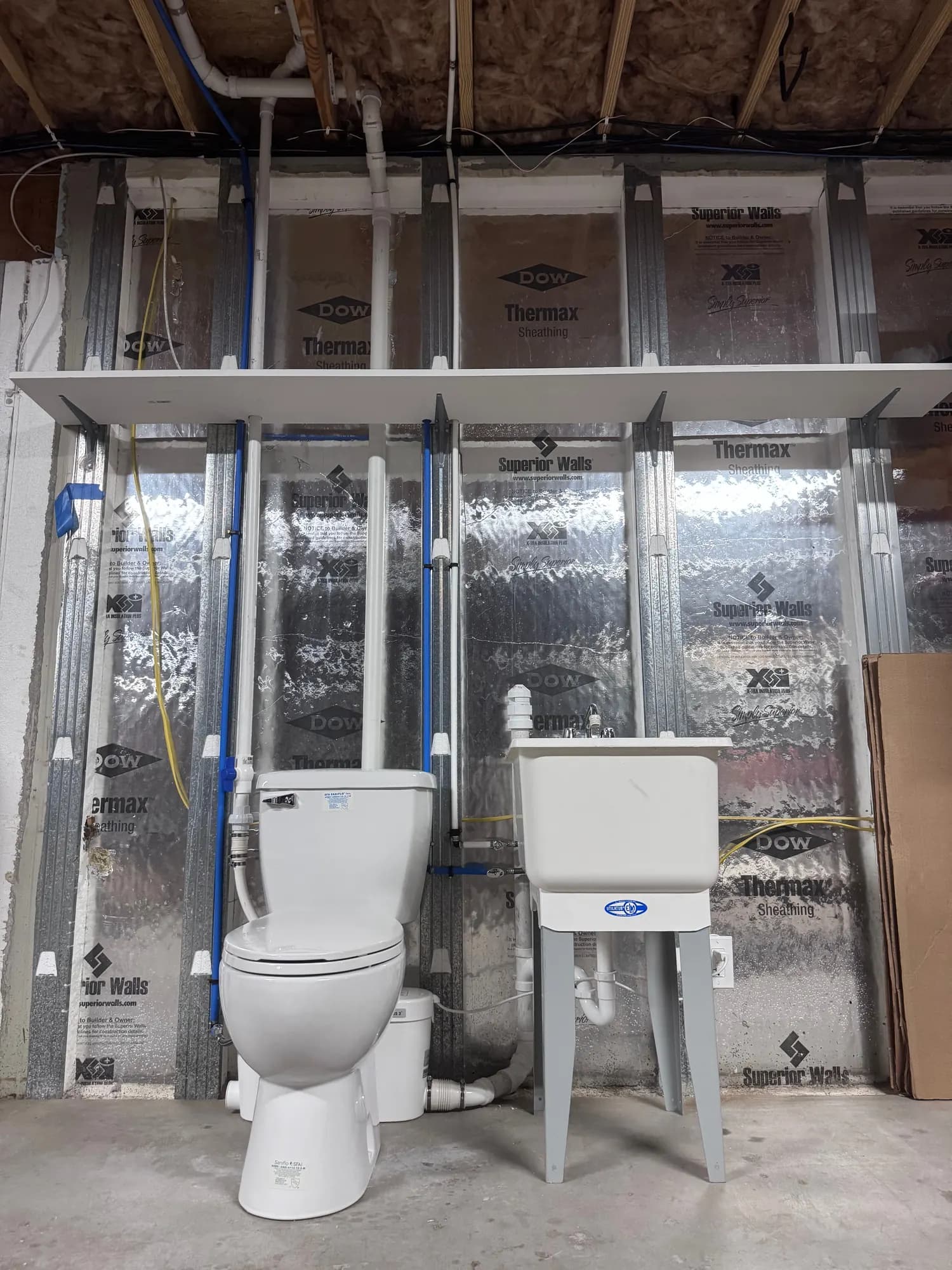
Saniflo macerating pump with toilet and sink 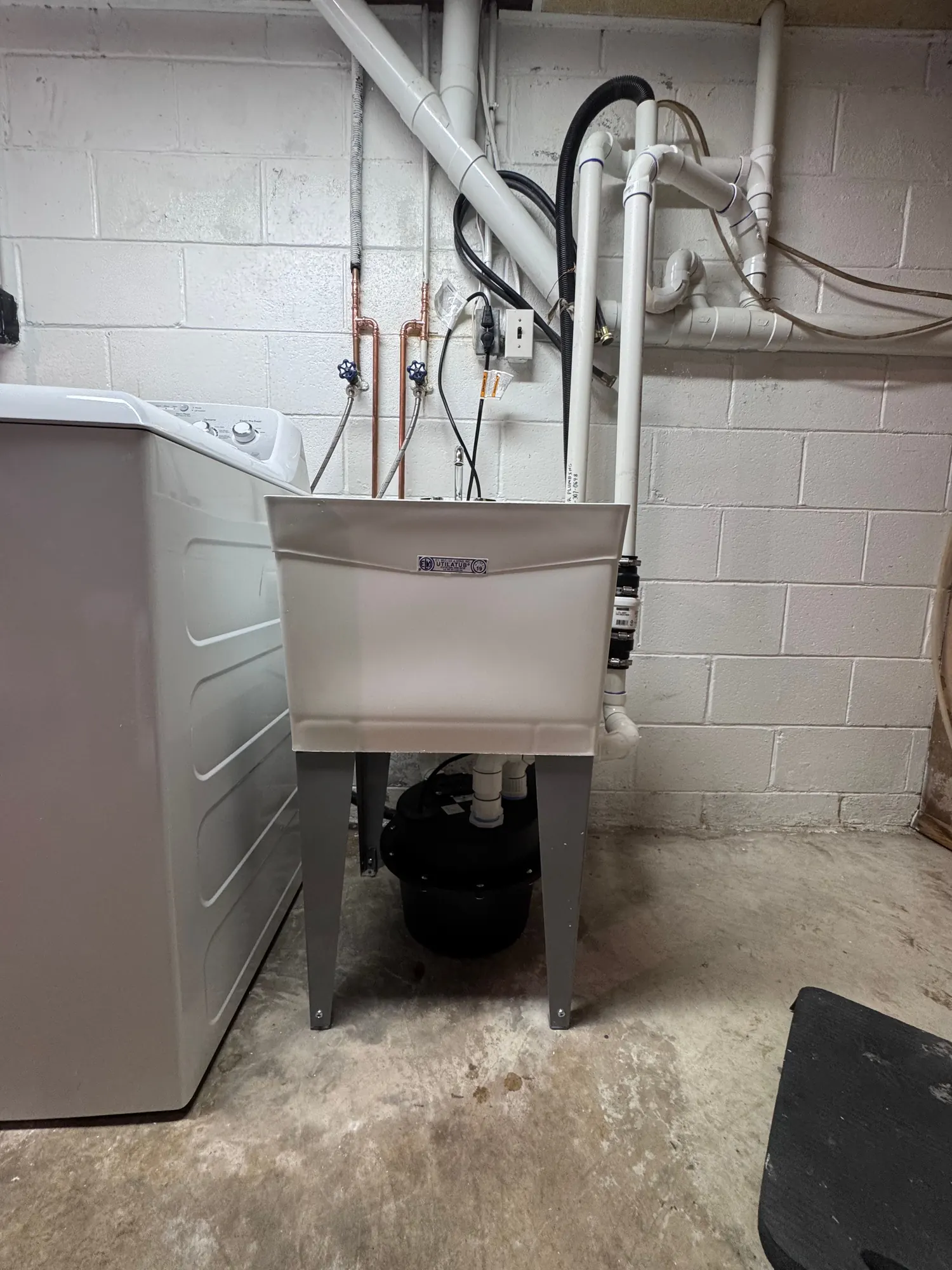
Utility sink with drain pump 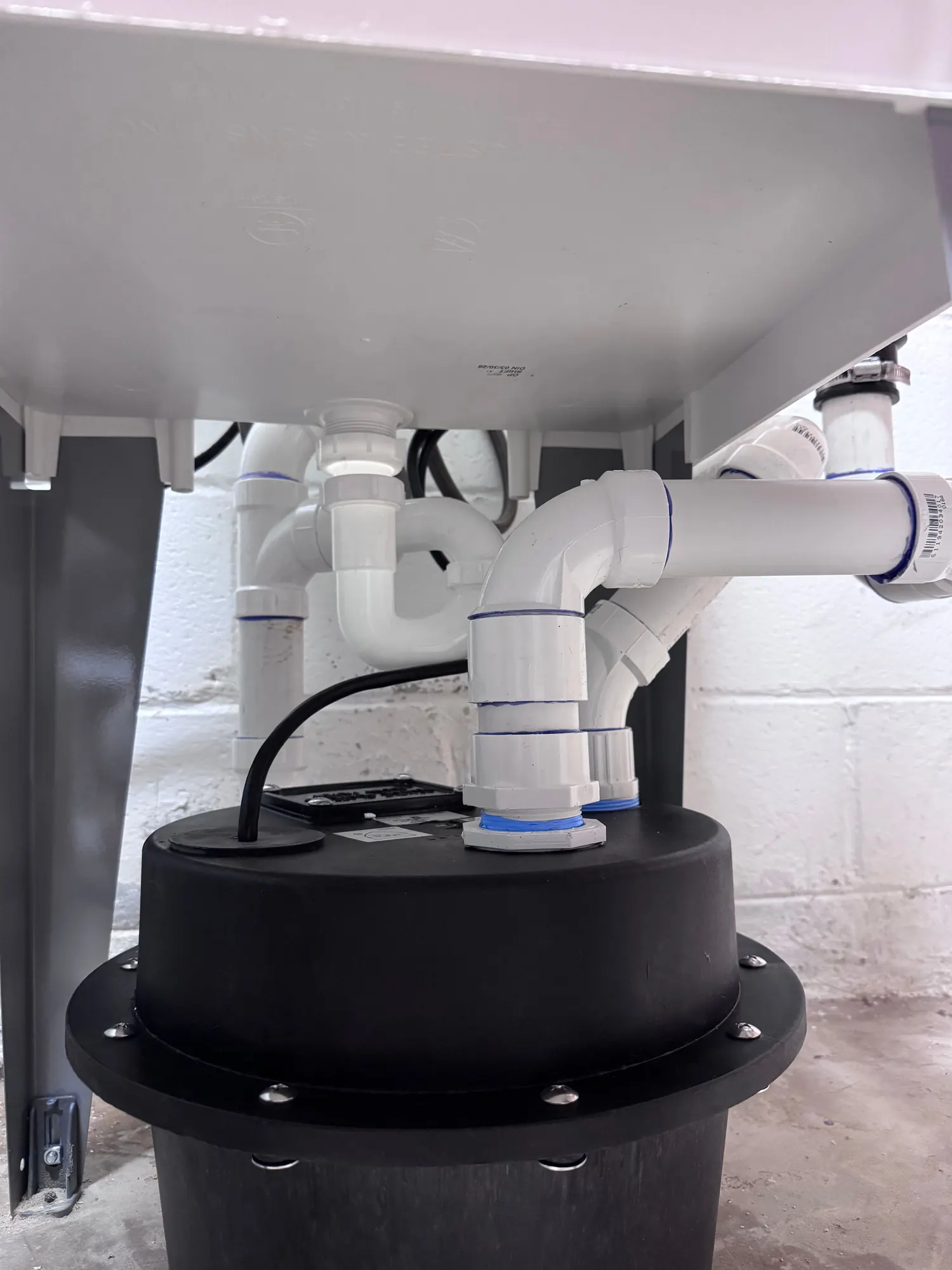
The pump and drain connections under the sink