Water on a basement floor is one problem with about six causes, and they cost wildly different amounts to put right. Guessing wrong is expensive in both directions — people have had drain tile installed around a foundation to cure a dripping cold line, and people have chased a phantom leak for a season when the water table was simply higher than the footing.
A wet basement gives up its cause easily enough if you ask four questions. Where does it show up, does it follow the weather, what does it look and smell like, and is it warm.
That last one is the fastest test in the business, and hardly anybody uses it.
Telling the two apart
Where it appears. Groundwater comes in at the edges: the cove joint where wall meets floor, a crack in the block, a pipe penetration, a window well, or up through the slab. A plumbing leak shows up where the plumbing is — under a joist run, a stain along a beam, a wet patch mid-floor with a dry perimeter.
Does it follow the rain. Groundwater arrives within hours of heavy rain or fast snowmelt and recedes over the next few days. Wet on a dry week in August is not the water table. Wet after a load of laundry is a drain. Wet at the same rate every day is a supply line, because pressurized water ignores the weather.
Clean or foul. Clear or muddy water smelling of earth is groundwater. Gray water with lint or soap film is a waste line. Anything foul is a backup. Stop running water in the house and treat it as a sewer or septic line problem.
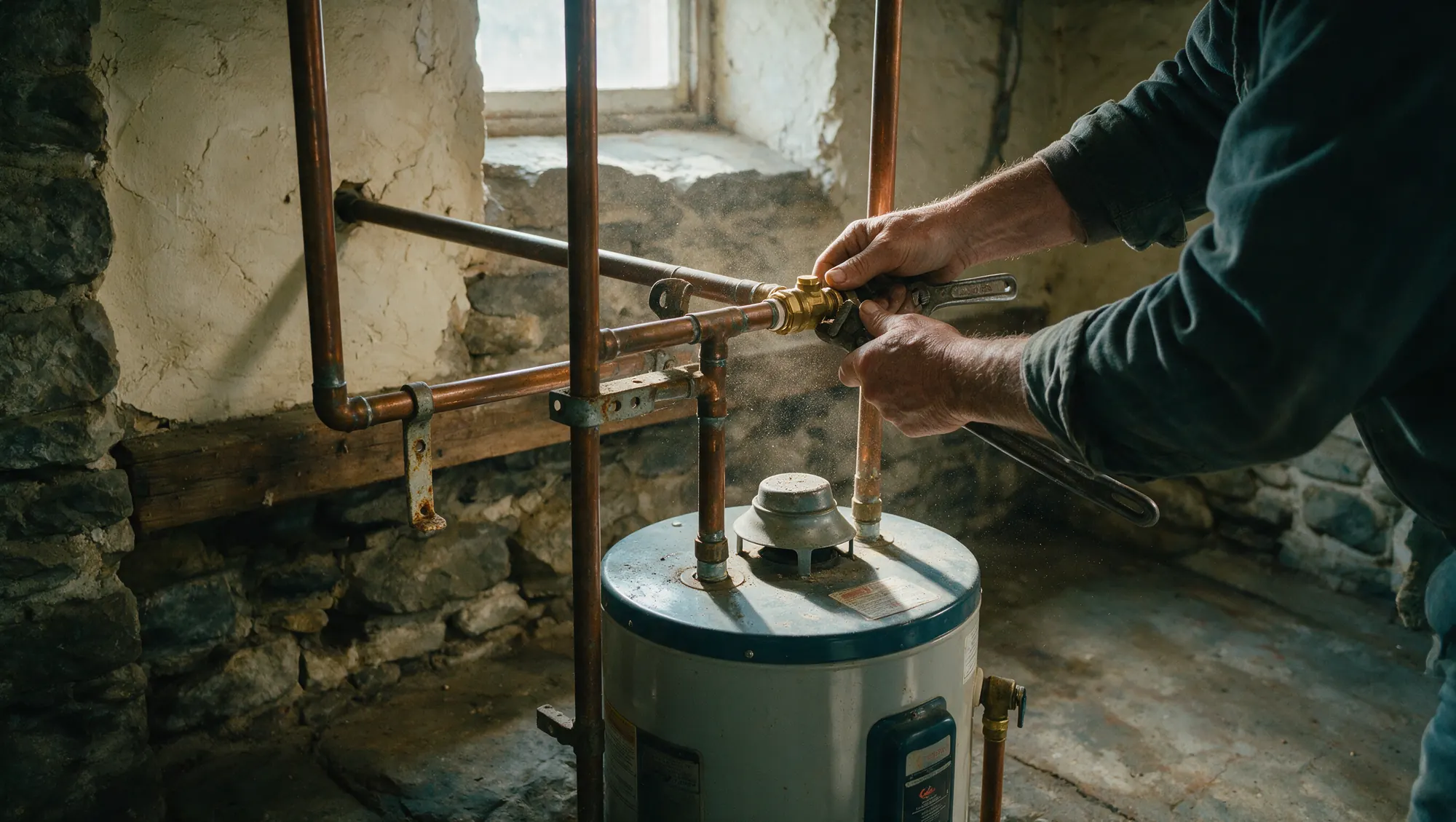
Is it warm. Groundwater is never warm. If the puddle or the wet joist is warm to the touch, it is a hot line or the water heater, and the search is down to a handful of pipes.
One more check settles most arguments. On metered borough water, shut every fixture, note the meter reading, wait an hour, and read it again; movement means a supply leak. On a well, watch the pressure gauge instead — a needle that falls with the house idle says the same thing.
Outside, before you spend a dollar inside
This is the part where we tell people not to spend money indoors, and it is genuinely the most common fix. A downspout dumping at the foundation puts an enormous volume of water into the soil right where you least want it — an inch of rain on a thousand square feet of roof is hundreds of gallons in one spot. Extend downspouts six to ten feet out and downhill, clean the gutters, and check that any buried downspout line has not silted up.
Then look at the grade. Soil should fall away from the wall about six inches over the first ten feet. Settled backfill against an old stone foundation often slopes the wrong way. A few wheelbarrows of regraded soil is a smaller project than anything indoors. Cover the window wells and clear their drains.
The sump system, and the discharge line nobody checks
A sump system is simple: perimeter drain tile collects water before it reaches the slab and delivers it to a pit, and a pump lifts it away from the house. Most of what goes wrong is not the pump.
The discharge line causes more failed-pump calls than the pumps do. It freezes solid in January where it runs along the ground. It gets buried under mulch, or settles into a dip that holds water. A mower crushes it. Corrugated pipe silts up inside. The outlet plugs with a mouse nest or sod. In every case the pump runs, moves nothing, gets hot, and trips or cooks itself — and the homeowner concludes the pump is dead.
- Slope the line so it drains itself, and discharge ten feet out, downhill, to daylight — not into a low spot that drains back.
- Fit a freeze-relief tee near the house, so a frozen outdoor run still lets the pump discharge at the wall instead of dead-heading. Look at the outlet in November and again in February.
- Never tie a sump discharge into the sanitary sewer, which is prohibited and overloads the plant, or into a septic system, where it floods the drain field.
- Keep a check valve on the discharge above the pump, or the column in the pipe runs back into the pit and the pump cycles again.
Testing your pump properly
Lifting the float by hand is not a test. It proves the motor turns. It says nothing about whether the switch trips at the right level, the impeller is moving water, or the discharge is open — the three things that actually fail.
The real test takes a bucket. Pour water into the pit until the float rises on its own and the pump starts. Then watch: does it start at a sensible level; does the pit empty briskly; does it shut off cleanly instead of chattering; does it stop before running dry, since that burns the seal. Then go outside and confirm water is coming out of the discharge — the step people skip, and the one that catches a frozen or buried line.
While you are down there, check the float has not fouled against the pit wall or the discharge pipe — far and away the most common single failure. Check the pit has a lid, the pump sits on a solid base rather than in silt, and the cord has not been knocked out of a piggyback plug. Test in October and again in April, and raise what you turn up when we look at a sump pump.
Floor drains that back up
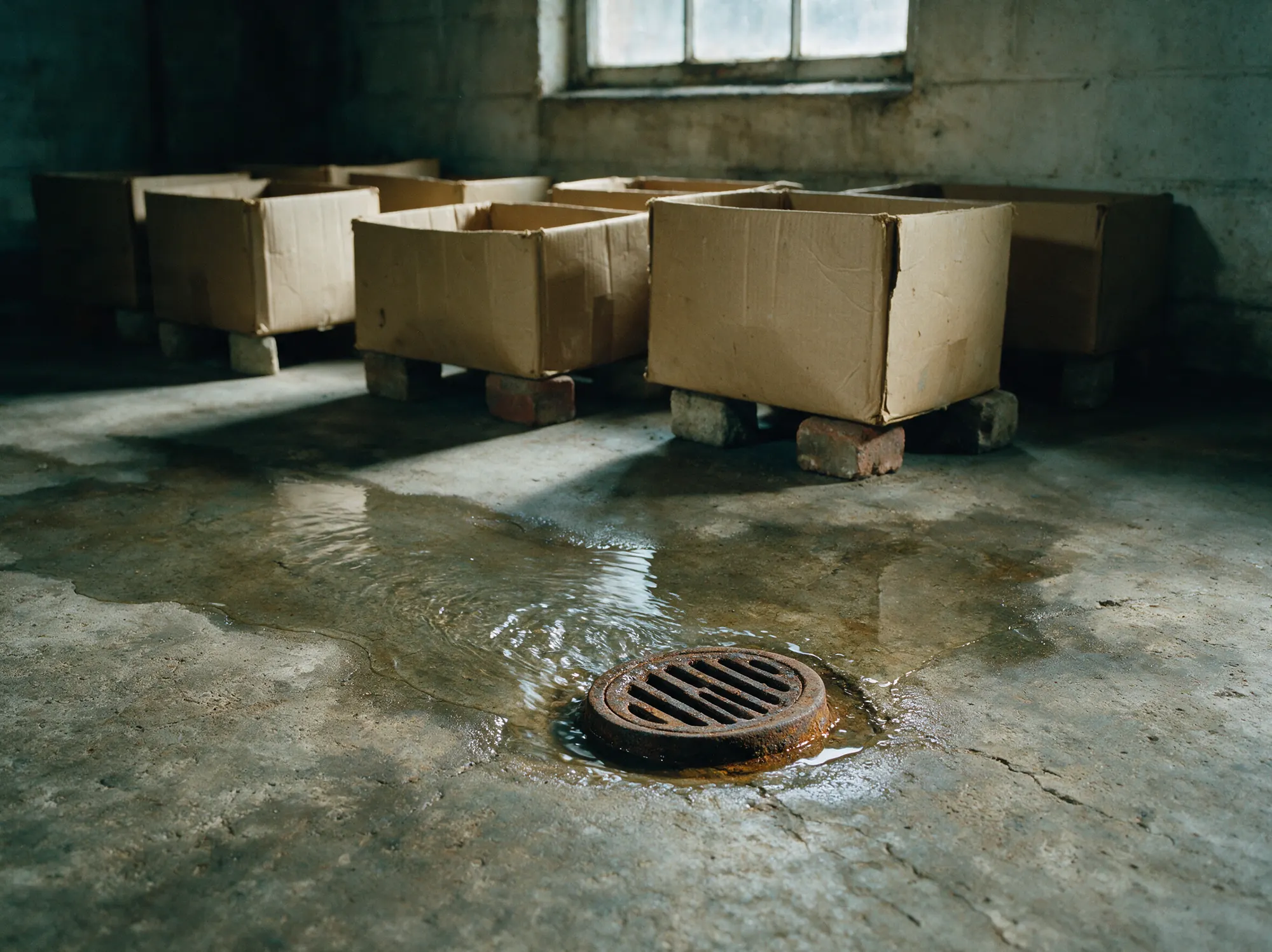
A basement floor drain is the lowest opening in the system, so it is the first place anything shows, and two very different situations make the same puddle. If clean-ish water comes up during heavy rain, the drain is probably tied to a storm or foundation system that has surcharged, or groundwater is finding the lowest opening. If foul water comes up when you flush or run the washing machine, the lateral is blocked and the floor drain is telling you first. Stop using water in the house.
On a septic system, a backup after days of heavy rain often means a saturated drain field rather than a blockage — the field cannot accept effluent because the ground around it is full of water. Pumping the tank buys a few days. Creek-bottom properties see this more than most.
Where a low-lying borough property has backed up more than once from the public sewer, a backwater valve on the building drain is the proper answer, given an accessible cleanout.
Condensation, and the leaks that are not leaks
Every summer somebody finds a puddle beside the pressure tank and concludes it is leaking. Almost always it is sweating. A steel drum of 52-degree well water sitting in humid August basement air runs with condensation and drips onto the floor. Cold supply lines and toilet tanks do it too.
The test costs nothing. Dry the surface, tape a square of foil or clear plastic tightly over it, and come back in a day. Water on the outside is condensation out of the room air. Water trapped behind it is coming out of the surface, and that is a real leak. The same test on a concrete wall separates seepage from humidity.
If it is condensation, run a dehumidifier near 50 percent relative humidity, sleeve the cold lines in foam, and make sure nobody is venting a dryer into the basement. And the white crust on block walls — efflorescence — means water moved through at some point. It does not mean the wall is wet today.
- Warm water
- Never groundwater — look at hot lines and the heater
- Follows rain
- Groundwater; unchanged by weather means a supply leak
- Sump discharge
- Ten feet out, downhill, checked twice a year
- Pump test
- Fill the pit with a bucket, then check the outlet
- Foil test
- Wet on the outside = condensation