You’re in the right place if
- Water on the basement floor
- Sump pump runs constantly
- Sump pump cycles every few seconds
- Pump runs but the pit doesn't empty
- Pump is silent and the pit is full
- Pit fills during dry weather
- Sewage smell from the sump pit
A sump pump is the one appliance in the house nobody looks at until the exact moment it has to work. It sits in a hole in the floor, in the dark, for months. Then the ground thaws, or heavy rain lands on frozen soil, or the creeks come up and the water table with them, and everything depends on a float switch that last moved in October.
We repair and replace sump pumps, sort out the discharge lines that cause most of the trouble, and fit backups in basements where a wet night would mean a rebuilt floor. We’ll also tell you when the pump was never the problem, which is more often than you’d think.
What we handle
Submersible and pedestal pumps, float switches, check valves, pits and liners, discharge piping inside and out, high-water alarms, and battery or water-powered backups. New pits in basements that never had one. Repair when the pump is worth it; replacement when it’s a fifteen-year-old motor that has done its work.
If it’s a sewage or ejector pump rather than a sump — the one in the sealed basin serving a basement bathroom or laundry — that’s a different machine and a different page.
What we see in Upper Dauphin houses
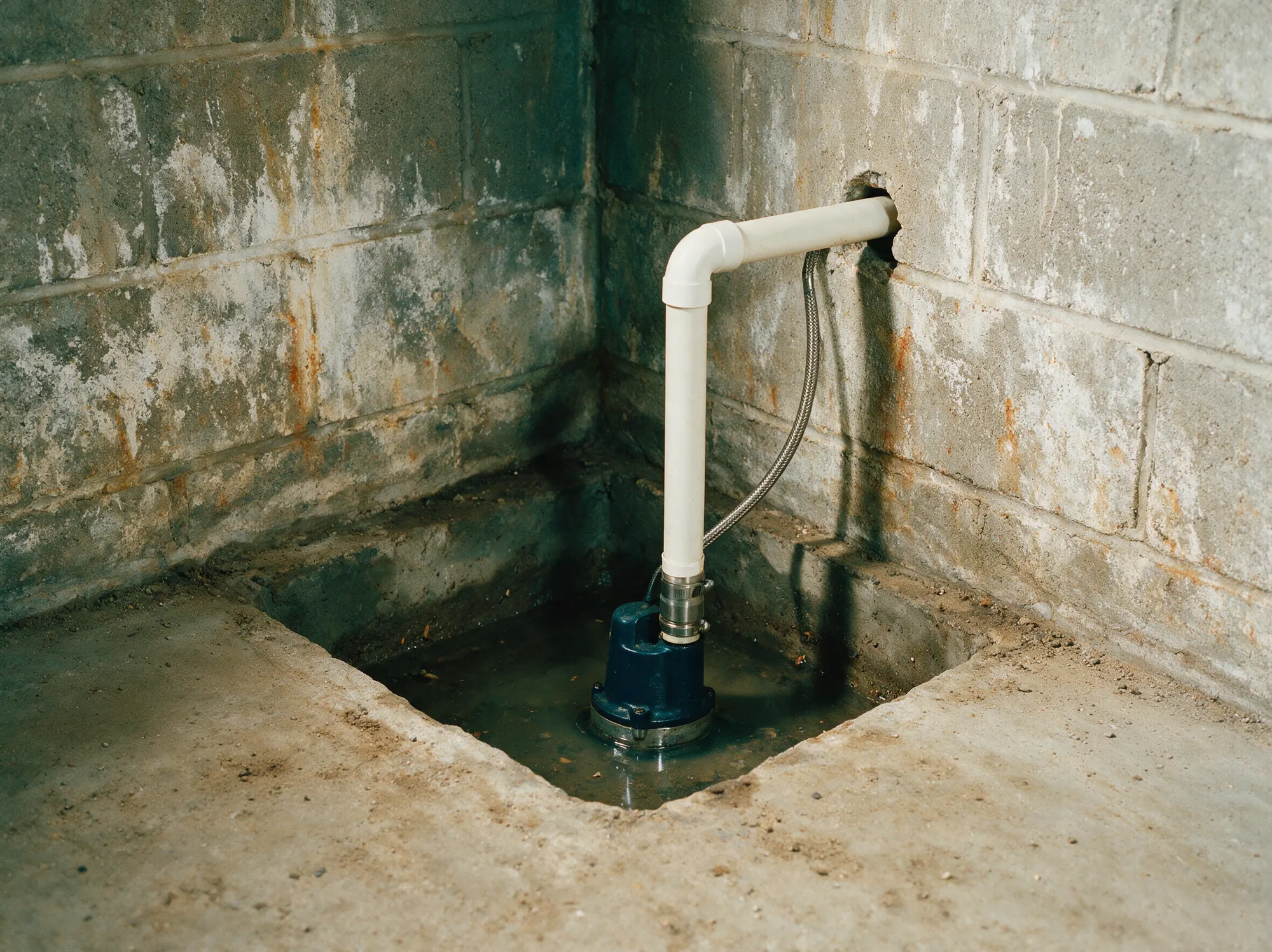
The valley floor along the Wiconisco and the Susquehanna carries a high water table, and plenty of basements in Millersburg, Halifax and out through the townships have seen water. Most of the older houses were built with no pit at all; the sump went in later, often into a corner where the floor was cut by whoever had the saw that weekend.
The failure we see most has nothing to do with the pump. A frozen or buried discharge line is the usual reason a “failed” pump isn’t failed: the motor runs, the water has nowhere to go, and the pit fills anyway. Lines that dump right at the foundation send the same water round again. Lines that run out under the lawn get crushed, silt up, or freeze at the outlet in January. We look at the discharge before we condemn a pump.
The other thing we see is water in the pit that isn’t groundwater. A pit that fills in dry weather, or smells wrong, can be a leaking supply line or a sewer problem finding the lowest point in the house. If you’re not sure which you’ve got, we wrote wet basement: groundwater or plumbing? to help you tell.
How it goes when we come out
We lift the lid, run the pump, watch what the water does and follow the discharge line to wherever it ends. Then we tell you what we found. If it’s the line, we fix the line and you keep your pump. If it’s the switch, that’s a small part. If it is the pump, we’ll give you a like-for-like option and a better-one option and say plainly what the difference buys you.
Backups are a real conversation, not a sales pitch. Battery backup works anywhere, including out in the townships, but the battery is a consumable and it needs testing. Water-powered backup runs off the pressure in a public main, so it’s a genuine option inside the boroughs and no option at all on a well. We fit both, and we’ll tell you which your house can actually use.
Worth knowing
- A high-water alarm in the pit is the cheapest useful thing you can buy for a basement. It tells you the night the pump quits, not the morning after.
- Sump water doesn’t belong in the septic or sewer. It overwhelms a drainfield, and it isn’t allowed on the public system either.
- Pour a bucket of water into the pit each spring before the thaw. If the float lifts and the pit clears, you’re in good shape. If not, call before the rain does.