The town sits on the east bank of the Susquehanna at the mouth of Wiconisco Creek. Dauphin County’s 2025 hazard mitigation plan records major flooding in the borough in 1889, 1936 and 1972, and notes that in the 1972 event several roads washed out, utility services were disrupted and homes on the west side of town were damaged.
1972 is the benchmark for a reason. At the USGS gauge on the Susquehanna at Harrisburg, Tropical Storm Agnes crested on 24 June 1972 at 32.57 feet and 1,020,000 cubic feet per second — the largest flow in a record that begins in 1865. Tropical Storm Lee reached 590,000 cubic feet per second at 25.17 feet in September 2011. Those two events anchor what people around here expect the river to be capable of.
The general mechanics of a sump system — float switches, check valves, pedestal against submersible, how to test one — are on our sump pump page. This is about putting one into the basements this town actually has.
Basements that were never built to be dry
The median house in the borough was built in 1953 and 37.5 percent predate 1940. Those basements have stone or block walls, usually no exterior waterproofing worth the name, and frequently no footer drain at all, because the idea was not standard when they were dug. Water finds the cove joint where the wall meets the floor, and in a wet spring it does not need a flood to get in.
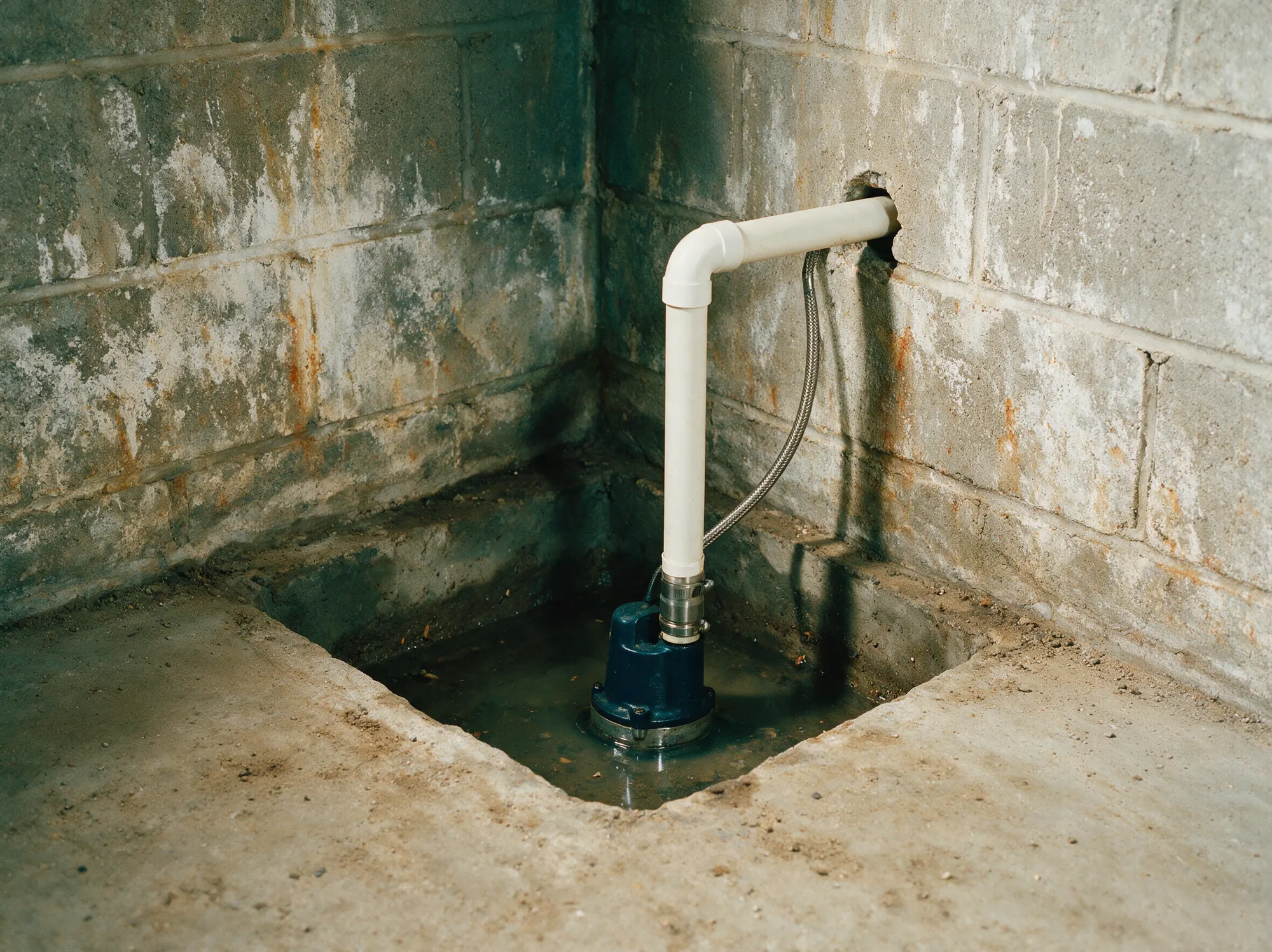
That changes what a sump is actually for. In newer construction a sump collects from a perimeter drain that somebody designed and installed. In an old basement here you are usually retrofitting: cutting a channel around the inside of the slab, laying drain tile in it, and giving that tile somewhere to go. It is a bigger job than dropping a pump into an existing hole. It is also the job that works.
The pit, the lid, and radon
Dauphin County’s adopted design criteria list the county’s radon potential as High. A sump pit is an open hole into the soil beneath your slab, which makes it one of the more direct paths for soil gas to enter a house. A sealed, gasketed lid with grommeted penetrations for the discharge pipe and the power cord costs very little more than an open pit and closes that path.
We are not radon mitigators and we are not going to pretend a lid is a mitigation system. If radon is a live question in your house, test for it and bring in somebody who does that work. What we will do is decline to leave a fresh open hole in your floor in a county rated the way this one is, when sealing it is standard practice and costs almost nothing.
A sealed lid earns its keep two other ways. It stops the pit evaporating humidity into the basement all summer, which is half of why old basements smell the way they do. And it keeps tools, toys and small animals out of the pit.
The discharge line, and 40 inches of frost
Where the water goes is the part most often done badly. The discharge has to reach daylight, or a storm connection where one exists, far enough from the foundation that it is not simply recirculating back into the drain tile it just came out of. Ten feet is a working minimum, further is better, and the grade it runs onto matters more than the raw distance does.
Freezing is the local complication. Dauphin County’s frost line is 40 inches and its winter design temperature is 0°F. A buried discharge that runs shallow, or that ends in a low spot where the outfall ices over, will block in January and back the water up into the pit. The pump then runs against a closed line, which is how a perfectly good pump burns out during a cold snap. A freeze relief fitting above grade near the house is cheap insurance against exactly that.
The same frost line drives a different number on the supply side. Pennsylvania’s residential code requires water service pipe to sit not less than 6 inches below the frost line, which puts a new service here at 46 inches — nearly four feet down. Frost depth is set by the local jurisdiction, so confirm the figure with the borough’s code official before anyone starts digging.
Never into the sanitary sewer
This one is not negotiable. The borough is entirely on public sewer, and that system is sized for wastewater, not for stormwater. Tying a sump discharge into a sanitary line sends groundwater to a treatment plant that then has to process it and put it in the river, and it does that hardest during exactly the storm when the plant and the mains are already loaded.
It also works against you directly. A surcharged sanitary main is the reason somebody’s floor drain backs up two streets over, and every sump quietly tied into it is part of the load. If your discharge currently vanishes into a pipe in the basement floor and nobody knows where it goes, that is worth finding out before the next long rain.
Backup power, and honest limits
A battery backup pump is worth having in a house that has taken water before, because the storm that fills the pit is very often the storm that takes the power out. Here is the honest description of one: it will run a pit for hours rather than days, and it will not move the same volume as the primary pump. It buys you time and it is not a second primary.
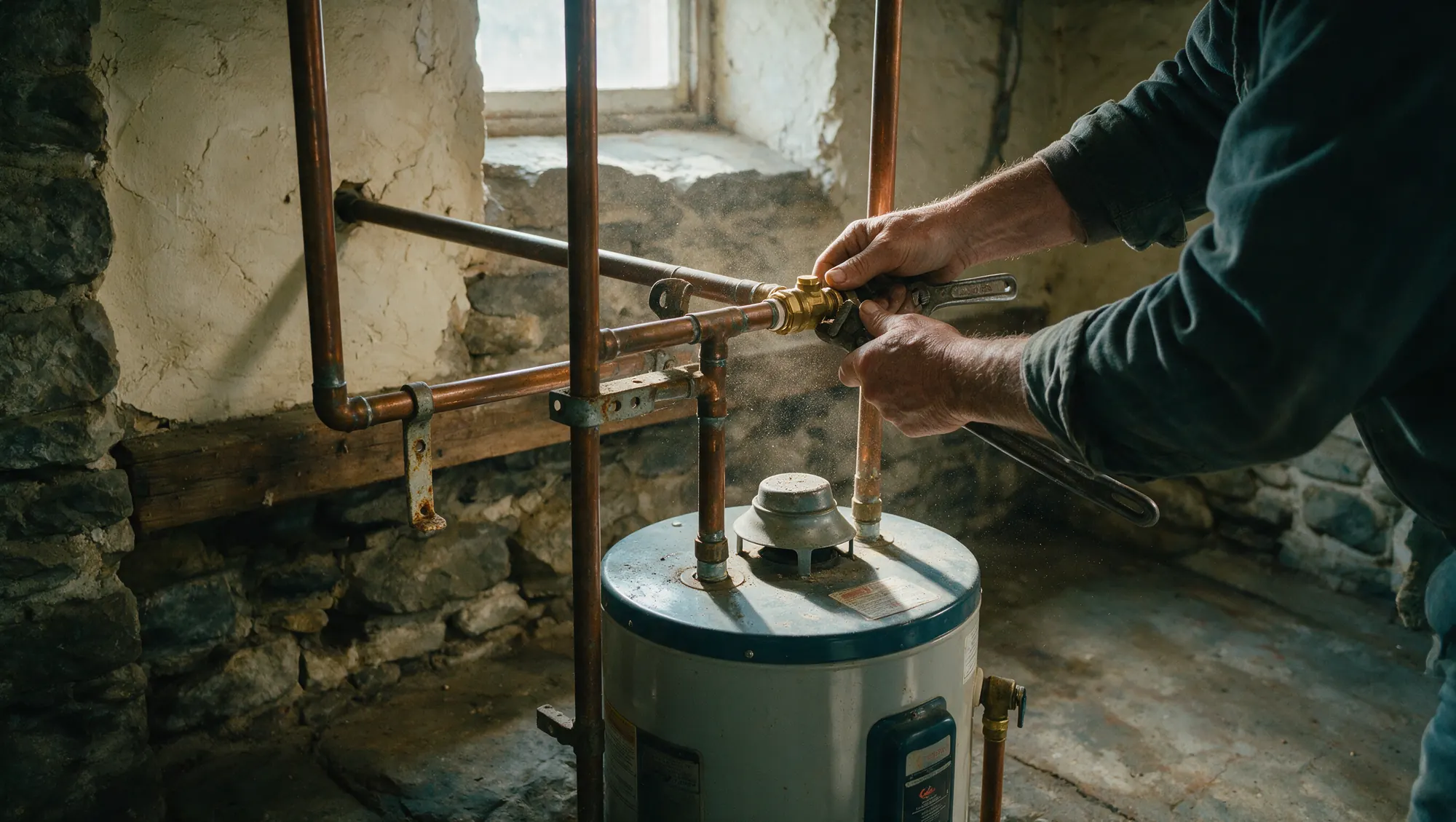
And there is a limit no sump can cross. A sump handles groundwater rising under a slab. It does not handle a river coming through a basement window. On the blocks of this town that have flooded before, the more useful conversation is about getting the boiler, the water heater and the electrical panel up off the floor, and about whether a backwater valve on the building drain makes sense for your particular street.
The general version
This page covers what’s different about sump pumps in Millersburg. For how we approach the work generally — the diagnostics, the repair-or-replace reasoning, the parts — read the main page.
Sump Pumps