Two houses four miles apart in this township can need completely different equipment, and the reason is not the plumbing. It is where the water started. Inside the borough it came out of a mountain spring, through a disinfectant and softening step, and along a distribution main. Out on a private well it came out of the rock under your own property and went straight to your pressure tank.
So we start in different places. On public water, the authority has already published a detailed test. On a well, nobody has tested anything unless you paid for it.
On the public side: what “softening agents” means
HAWASA describes its treatment as simple disinfectant and softening agents added to water drawn from five mountain springs and three drilled wells inside the township. It is the only one of the three local systems that says it softens. Millersburg filters surface water from a creek. Elizabethville pumps wells and adjusts pH. Three towns, three approaches.
Practically, most borough households do not need a softener in the basement, and anyone selling you one should be asked what test result they are working from. Softening at the plant is not the same as the ion-exchange softener you would fit on a hard well. If you are getting scale on the kettle and spotting on the glassware in town, get a hardness number before you buy anything.
The copper number, and what it does to a house
The most useful figure in the authority’s 2024 report is copper: a 90th-percentile result of 1.34 ppm, with three of twenty sampled sites above the 1.3 ppm action level, and the report attributes copper to corrosion of household plumbing. Copper does not come out of a spring in any quantity. It comes off the inside of your pipe.
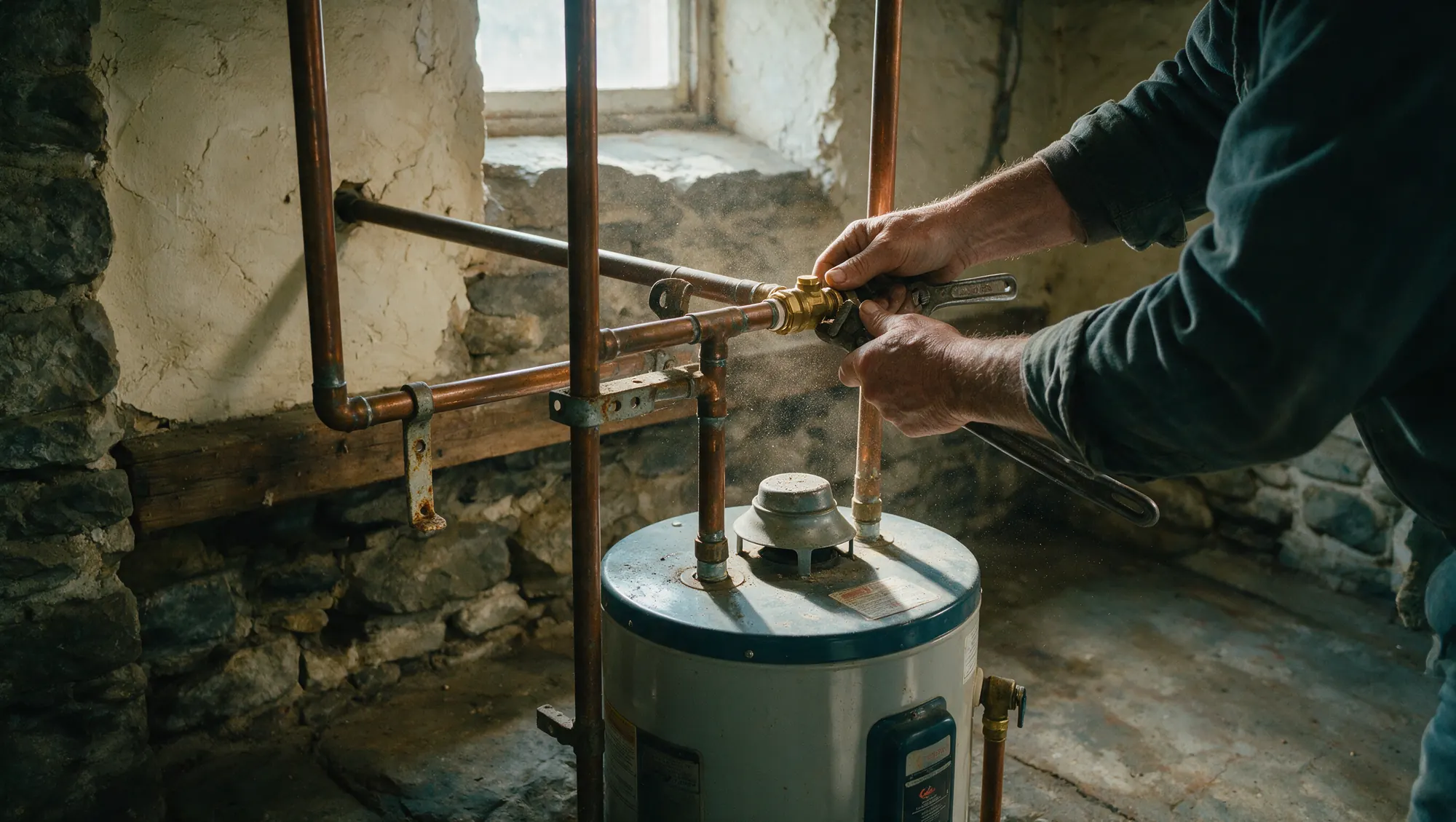
That is the signature of soft, low-alkalinity mountain water, and it is mildly aggressive toward copper tube. It shows up three ways. Blue-green staining in a tub, a basin or under a tap that drips. A slight metallic taste on the first draw in the morning, after the water has sat in the pipe all night. And in older copper supply runs, pinholes — a weeping joint or a stained joist that turns up long before anything drips onto a floor. If you have that color in your fixtures, the pipework deserves a look, and that is pipe and leak repair territory rather than filtration.
One habit helps: run the cold tap for thirty seconds before drawing water that has stood in the pipe overnight. It costs nothing and it flushes what has been sitting against metal.
Nitrate, stated plainly
The 2024 report detected nitrate at 4.58 mg/L, against a limit of 10 mg/L, attributed in the report to “Runoff from fertilizer use; Leaching from septic tanks, sewage; Erosion of natural deposits.” That is the chemistry of a farming valley with on-lot septic in it, and it is under the limit.
Nitrate matters for one group specifically: infants under six months old, for whom high nitrate interferes with the blood’s ability to carry oxygen. If you have a baby in the house, or you are on a private well drawing from the same landscape, test. A carbon filter does nothing for nitrate. Reverse osmosis and ion exchange do, and boiling makes it worse by concentrating it. That is the whole honest answer, and we are not going to dress it up into a reason to sell equipment.
On a private well, what the county’s numbers do and do not say
Across wells sampled by USGS and state programs in Dauphin County, median hardness is 120 mg/L — seven grains per gallon — with the 90th percentile at 227 mg/L, about 13 grains. 45% sit above 120 mg/L and 20% above 180 mg/L. Iron exceeds the 300 µg/L staining threshold in 32% and manganese exceeds 50 µg/L in 36%. pH is below 6.5 in 22%.
Read the caveat with the numbers. Those are wells sampled by USGS and state programs across the whole county over many years, including monitoring and research wells, and the county contains the anthracite belt where mine drainage depresses pH and raises iron and manganese. It is not a random sample of domestic drinking-water wells and it is not a forecast for yours. It is a description of the range you are drawing from, and a reason to spend money on a lab report before spending it on a tank.
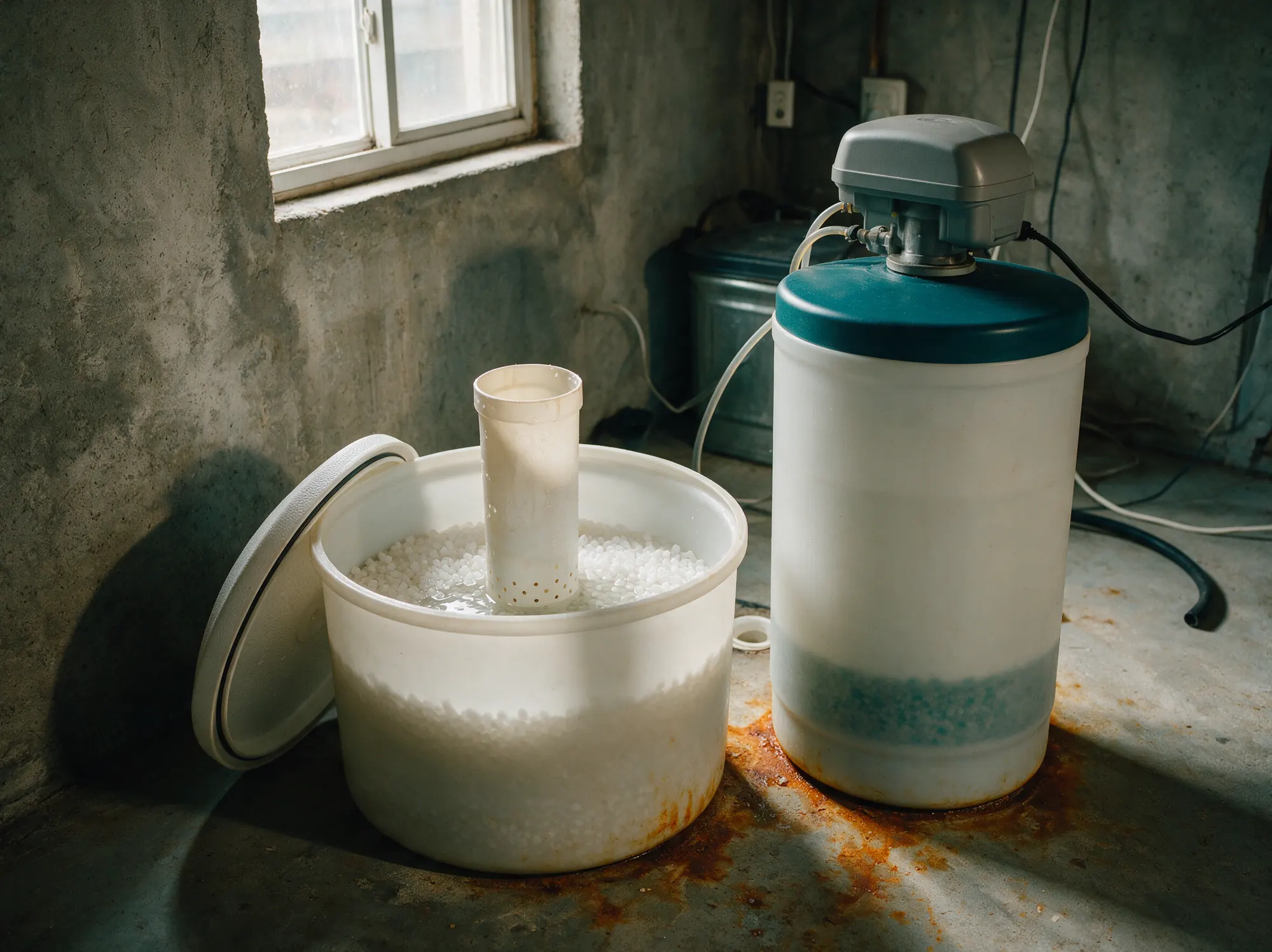
Translated: hardness at seven grains is the level where a softener starts to pay for itself in water heater life and fixture cartridges. Iron above the staining threshold is the orange in the tub and the orange in the laundry, and it fouls softener resin if you put it through the wrong equipment. Manganese produces the black or gray staining and the slime in a toilet tank, and it is harder to remove than iron. Low pH is the corrosive case — blue-green staining and pinholes again, this time from your own water rather than the borough’s.
The rotten-egg smell, and the one that is not your well
The 2007 joint comprehensive plan describes the Hamilton Formation, which underlies part of this area, as producing “well yields that are fair but the water may have high iron and sulfur content.” That is the geological basis for the sulfur smell people report on wells around here. Nobody has published hydrogen-sulfide measurements for these wells, so we will not put a number on it.
Before you treat for it, do one test that costs nothing. Run the cold tap and smell it. Then run the hot tap and smell that. If the rotten-egg smell is only on the hot side, it is almost certainly not the well at all — it is sulfur bacteria reacting with the magnesium anode rod inside your water heater, and changing to an aluminum-zinc anode usually ends it. If both sides smell, the source is the supply and that is a genuine treatment conversation. People spend real money treating wells that were never the problem.
Test first, buy second
About half of Pennsylvania’s private wells have never been tested, and roughly half of those that are tested come back with at least one problem. Penn State Extension is the standard local referral for a proper water test. Get hardness, iron, manganese, pH and coliform at minimum; add nitrate if there is farm ground uphill, and lead if the house is old enough to have lead-soldered copper.
Then the equipment conversation is short, because the report tells you what you need. The general treatment options — softeners, iron filters, neutralizers, sediment pre-filtration and where each one belongs in the sequence — are on the water treatment page. If the complaint is pressure or grit rather than chemistry, start with well pumps and pressure tanks instead.
The general version
This page covers what’s different about water treatment in Halifax. For how we approach the work generally — the diagnostics, the repair-or-replace reasoning, the parts — read the main page.
Water Treatment